Drug arrests at a Phish concert wouldn't typically qualify as noteworthy news on their own. But a recent statement from prosecutors in Noblesville, Indiana, just outside Indianapolis, has drawn attention less for the arrests themselves than for the tone in which officials announced them.
On Monday, the Hamilton County Prosecuting Attorney's Office posted a statement on Facebook detailing arrests and large-scale drug seizures connected to Phish's three-night run of shows at the Ruoff Music Center.
The substance of the announcement wasn't especially surprising; drug seizures at jam-band concerts are hardly a new phenomenon, but the office's evident exasperation stood out, particularly a line expressing disappointment over how many people showed up intending to break the law.
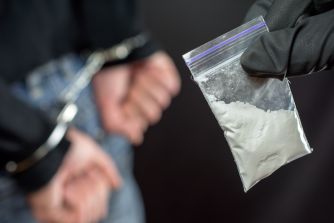
According to the statement, officers seized substantial quantities of drugs commonly associated with the Phish scene, including psilocybin mushrooms, LSD, marijuana, MDMA and nitrous oxide. But the office also said officers recovered methamphetamine, heroin and fentanyl over the course of the three shows, a detail that pushes the seizures well beyond what's typically expected at this kind of event.
Five people were arrested on what the prosecutor's office described as major felony-level drug dealing or possession charges. Officers also reportedly identified several individuals with outstanding warrants, including one person wanted in another state for failing to register as a sex offender.
The prosecutor's office emphasized that the vast majority of concertgoers weren't involved in any of this, but made clear that law enforcement intends to hold accountable those who were, framing the arrests as necessary to protect the safety and experience of fans who simply came to enjoy the music.
That framing didn't sit particularly well with much of the audience reacting online. The Facebook post drew a wave of critical comments, with many users pushing back on what they saw as the office painting Phish's fanbase with an unfairly broad brush, especially given that the vast majority of the crowd was there for nothing more than the music and the community around it.
Others noted the seemingly selective nature of publicizing arrests tied specifically to a Phish run, when similar seizures at other large concerts and festivals rarely generate the same kind of public statement. Still, some simply pointed out that finding recreational drugs at a Phish show is about as predictable an outcome as one could imagine, given the band's long-standing association with festival and jam-band culture.
Phish has built one of the most devoted fan bases in modern touring music over several decades, and multi-night stands like this one in Noblesville routinely draw large crowds who follow the band from city to city. That culture has long included a reputation, fair or not, for recreational drug use among segments of the crowd, which is part of why prosecutors expressing shock at drug activity around a Phish concert struck many commenters as somewhat out of touch with the reality of large touring music events generally.
It remains unclear whether Hamilton County officials plan to release further details about the individuals arrested or the specific circumstances surrounding the more serious drug seizures reported alongside the more commonly expected substances found at the shows.