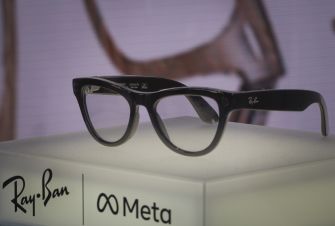
An insurer has gone to federal court in California to argue that it bears no responsibility for defending or paying out claims against Sama, the data annotation company accused of using recordings captured by Meta's smart glasses to help train artificial intelligence systems.
In a complaint filed Monday, the insurer contends that the company's own policy explicitly excludes coverage for the type of privacy violations alleged in a wave of consolidated class action lawsuits.
The insurer, Travelers Excess and Surplus Lines Co., told the court it has no duty to defend or indemnify Samasource Impact Sourcing Inc. (the company that operates as Sama) in connection with 13 class actions that have been consolidated against it.
Travelers had issued Sama an errors and omissions policy and has been footing the bill for the company's defense, but only under a reservation of rights, meaning it preserved the ability to later argue that coverage never applied in the first place.
The underlying litigation traces back to March, when users of Meta's AI-enabled glasses began suing both Sama and Meta in the Northern District of California. According to those lawsuits, the glasses recorded video and audio from wearers' everyday lives and funneled that footage to Sama's data annotation operations in Kenya, where employees reviewed and labeled the material to help train Meta's artificial intelligence systems. Plaintiffs say they had no idea this was happening and never agreed to it.
Central to the consumers' case is the claim that they bought the glasses under a false understanding of how the devices worked. They allege Meta marketed the product as privacy-conscious and fully controlled by the person wearing it, when in reality audio and video were being captured and shipped off to a third-party contractor for human review without their knowledge or consent.
Those allegations form the basis for a broad set of legal claims, including invasion of privacy, negligence, and unjust enrichment under common law, along with alleged violations of the federal Wiretap Act, the Electronic Communications Privacy Act, and a range of state-level statutes.
Travelers said that once it learned of the first three class actions, it moved quickly to flag a potential problem, sending Sama a letter on April 1 stating that coverage was barred under the policy's wrongful collection exclusion.
That provision, as described in the complaint, broadly excludes coverage for losses tied to collecting or processing protected personal information, whether done intentionally or not, without the written notice or consent required under applicable privacy laws.
Despite raising that exclusion early on, Travelers said it nonetheless agreed to defend Sama, under reservation of rights, once ten additional class actions were filed and brought to its attention.
But the insurer is now asking the court to confirm that this defense obligation doesn't reflect any actual duty to cover the claims. Beyond the wrongful collection exclusion, Travelers pointed to a second provision in the policy, known as the specific legislation exclusion, which it says bars coverage for losses stemming from violations of laws governing the unsolicited distribution of audio or video recordings.
Travelers also argued that a separate part of the policy excludes claims rooted in false or misleading advertising or violations of consumer protection statutes. The class actions accuse Meta and Sama of misleading consumers about the privacy features of the glasses, arguing that buyers would never have purchased the devices had they known their recordings were being reviewed by outside contractors.
Those claims invoke consumer protection laws in multiple states, including California's False Advertising Law and Consumer Legal Remedies Act, New York's False Advertising Law and Deceptive Acts and Practices Act, and Illinois' Consumer Fraud and consumer protection lawConsumer protection law is the body of federal and state laws designed to protect people from unfair, deceptive, fraudulent, or abusive practices in the marketplace. These laws regulate areas such as advertising, sales, lending, debt collection, credit reporting, warranties, financial services, and consumer products.Read more → Act.
In addition to disclaiming future obligations, the insurer is now also seeking any money it has already spent defending Sama or that it might pay toward a settlement or judgment.
Share This Article
If you found this article insightful, consider sharing it with your network.
Camila studied Entertainment Journalism at UCLA and is the founder of a clothing brand inspired by music festivals and youth culture. Her YouTube channel, Cami's Playlist, focuses on concerts and music history. With experience in branding, marketing, and content creation, her work has taken her to festivals around the world, shaping her unique voice in digital media and fashion.
More than 70 people who bought, used, or were recorded by Meta’s smart glasses are accusing the company of capturing some of their most private moments, including people undressing, using the bathroom, and having sex, and routing some of that material to overseas contractors reviewing data for its artificial intelligence...
Read
More »
OpenAI and CEO Sam Altman are facing 30 new federal lawsuits from students, teachers and a school principal affected by the Tumbler Ridge mass shooting, expanding litigation that claims the company failed to alert Canadian authorities after its safety team identified the shooter as a potential threat months before the...
Read
More »
Meta is facing a proposed class action accusing the company of using Facebook and Instagram photos without consent to extract biometric data, train artificial intelligence models, and develop facial recognition technology for its smart glasses.The lawsuit, filed September 4 in federal court in Chicago, claims Meta collected information from faces...
Read
More »
Former Meta product design manager James Tillinghast is suing Meta Platforms, alleging the company fired him after he refused to sign an immigration support letter that he says overstated another employee's work and after he raised concerns about how Meta provided immigration assistance to workers.The lawsuit, filed Aug. 17 in...
Read
More »
Federal and state regulators have sued Hims & Hers Health, alleging the telehealth company charged hundreds of thousands of consumers for prescription subscriptions without their informed consent and shared sensitive health information with advertising platforms despite promises that its service was private and discreet.The Federal Trade Commission, California, and the...
Read
More »