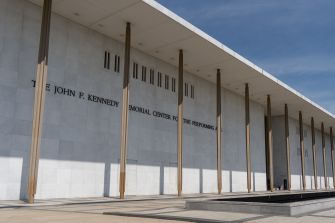
A District of Columbia judge has ordered the Kennedy Center to pay more than $250,000 in legal fees and costs after the arts institution unsuccessfully sued jazz musician Chuck Redd over his decision to withdraw from a holiday performance.
Superior Court Judge Tanya Jones Bosier ruled Monday that the Kennedy Center must pay $252,479.70 in fees and costs incurred by Redd's legal team. The institution's attorneys had challenged the amount as disproportionate to what was at stake in the case, but the judge found the requested sum reasonable based on the work performed by Redd's lawyers.
The dispute began in late 2025 after the Kennedy Center's board, which had been reshaped by President Donald Trump, voted to add his name to the venue. Redd withdrew from his Christmas Eve Jazz Jam in protest of the change. He had hosted the annual performance at the Kennedy Center since 2006.
Then-Kennedy Center President Richard Grenell threatened Redd with a $1 million lawsuit following the cancellation. The institution filed a breach-of-contract claim against the musician in March.
Redd moved to dismiss the case, arguing that he had never signed a contract requiring him to perform the 2025 show. Jones Bosier granted the motion in June, finding the Kennedy Center had failed to establish a valid breach-of-contract claim because no signed agreement existed.
The judge also granted Redd's request for dismissal under the District of Columbia's Anti-SLAPP Act. The law provides a mechanism for defendants to seek early dismissal of claims arising from speech or advocacy on matters of public interest when the party bringing the lawsuit cannot show it is likely to succeed on the merits.
Redd's attorney, Lisa J. Banks, said the fee award was an appropriate result after her client was required to defend against the Kennedy Center's lawsuit. A Kennedy Center spokesperson said the institution intends to appeal the ruling.
The underlying dispute unfolded as the Kennedy Center was facing a separate legal challenge over the addition of Trump's name. A federal judge ruled in May that the board lacked authority to rename the institution and ordered references to Trump removed from the building and official communications.
The Trump administration appealed that decision in June. A federal appeals court later declined to allow Trump's name to be restored while the appeal proceeds.