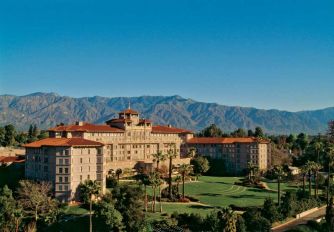
Langham Hotels Pacific Corporation has agreed to pay $320,000 and refund at least $216,795 to guests to settle allegations that its Pasadena hotel raised room rates beyond California’s legal limit during the emergency caused by the January 2025 Los Angeles wildfires.
The agreement resolves a consumer protection lawsuit filed by the Los Angeles County District Attorney’s Office and County Counsel’s Office over rates at the Langham Huntington Pasadena. The company did not admit liability and cooperated with the county’s investigation.
Under the judgment, $300,000 will be paid as civil penalties and another $20,000 will cover investigative costs. Refunds owed to hotel guests are separate from those amounts and could exceed the $216,795 calculated for stays between January and April 2025.
County officials claimed Langham charged more than the maximum rate allowed after demand for temporary lodging rose during the fires. Their lawsuit relied on California’s emergency price gouging law and the state’s broader ban on unlawful business practices.
Gov. Gavin Newsom declared a state of emergency in Los Angeles and Ventura counties on Jan. 7, 2025. State protections tied to that declaration were later extended through July 1, 2025, while Los Angeles County continued its restrictions on hotel prices through March 29, 2026.
California Penal Code Section 396 sets a specific limit on hotel rate increases after an emergency is declared. A hotel generally may not charge more than 10% above the regular rate it advertised immediately before the declaration. That earlier price becomes the benchmark used to measure a later increase.
Businesses may charge more when they can show that an increase came from added costs for goods or labor, a regularly scheduled seasonal adjustment, or a rate fixed under an earlier contract. The exception requires a hotel operator to provide a lawful reason for exceeding the 10% limit.
Los Angeles County alleged that the Langham Huntington Pasadena crossed that threshold while the emergency protections were in effect. Because the dispute ended through a settlement, no court made a finding after trial that the hotel violated the law.
Price gouging can carry criminal penalties under Section 396, but the county pursued Langham through a civil consumer protection action. The statute also states that a price gouging violation qualifies as an unlawful business practice under California’s Unfair Competition Law.
That connection allows prosecutors to seek remedies aimed at both the business and the people who allegedly lost money. California law permits district attorneys and certain county lawyers to pursue civil penalties for unfair competition, while a court may also order the return of money obtained through the challenged conduct. Civil penalties under the law can reach $2,500 for each violation.
Eligible guests include people who stayed at the Pasadena property between Jan. 7, 2025, and March 29, 2026, and paid more than the maximum rate allowed during the emergency period. Each refund will cover the amount charged above the legal cap rather than the entire cost of the stay.
Langham must make reasonable efforts to identify and locate guests who qualify for repayment. Money that cannot be delivered must be transferred to the Los Angeles County Department of Consumer and Business Affairs instead of remaining with the hotel company.
Another part of the judgment addresses the systems used to set room prices. Langham must modify its automated, algorithmic, and other pricing tools to prevent unlawful increases during future emergency declarations.
Hotels commonly adjust rates as demand changes, including through software that can respond quickly to booking activity. Emergency price restrictions place a legal limit on those adjustments, regardless of whether a rate was selected by an employee or produced by an automated system.
The pricing provision applies to Langham and does not establish a broader court ruling on hotel pricing algorithms. The judgment requires the company to modify its systems to prevent unlawful rate increases during a declared emergency.
The settlement resolves the county’s civil claims against Langham without an admission of liability.