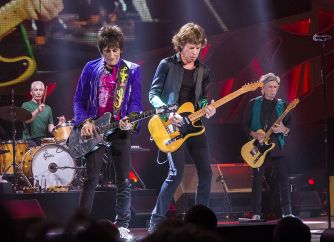
Universal Music Group, Concord Music Group, and ABKCO have filed a lawsuit against Anthropic, a company specializing in generative artificial intelligence. The lawsuit, filed in a federal court in Tennessee, accuses Anthropic of "systematic and widespread infringement" for using copyrighted lyrics from artists like Katy Perry, The Rolling Stones, and Beyoncé to train their AI systems.
This lawsuit is particularly noteworthy as it marks the first time music publishers have taken legal action against an AI company for copyright infringement related to lyrics. It follows a similar suit by the Authors Guild against OpenAI, alleging mass-scale copyright infringement.
The complaint states that Anthropic has neither sought nor secured permission from the publishers to use their copyrighted material. This is highlighted as a double standard, as Anthropic itself would not want its proprietary code used without authorization.
The lawsuit cites Anthropic's Claude AI chatbot as evidence, which, when prompted, provided nearly identical lyrics to Katy Perry's "Roar," owned by Concord. The publishers argue that Anthropic's actions are undermining an existing market of lyric aggregators and websites that have legally licensed their works. By not licensing the content, Anthropic is not only depriving the publishers of control over their copyrighted works but also competing unfairly against those who respect copyright laws.
The publishers aim to counter any fair use defense that Anthropic might raise. They point to the recent Supreme Court decision in Andy Warhol Foundation for the Visual Arts v. Goldsmith, which emphasized that the "commercial nature of the use" must be balanced against whether the work was sufficiently transformed.
It is well established by copyright law that an entity cannot reproduce, distribute, and display someone else’s copyrighted works to build its own business unless it secures permission from rightsholders.
— Matthew Oppenheim, Copyright Attorney at Oppenheim + Zebrak
The lawsuit alleges multiple types of copyright infringement: direct, vicarious, and contributory. It also includes a claim for the illegal removal of copyright management information. The publishers are seeking a court order to prevent Anthropic from using their copyrighted material and are demanding up to $150,000 in damages per infringement.
Matthew Oppenheim, a copyright attorney representing the publishers, stated that “It is well established by copyright law that an entity cannot reproduce, distribute, and display someone else’s copyrighted works to build its own business unless it secures permission from rightsholders.”
This lawsuit raises critical questions about the intersection of copyright law and artificial intelligence, setting the stage for what could be a landmark case in intellectual property law.
Share This Article
If you found this article insightful, consider sharing it with your network.
Bridget studied Communications and Marketing at California State University, Long Beach. She also has experience in the live music events industry, which has allowed her to travel to festivals around the world. During this period, she acquired valuable expertise in branding, marketing, event planning, and public relations.
The Seattle Times and Newsday have sued OpenAI and Microsoft, accusing the companies of copying hundreds of thousands of articles without permission to train AI systems and asking a federal court to destroy models and training datasets that incorporate their journalism.The copyright infringement lawsuit, filed September 4 in the U.S....
Read
More »
Jason Isbell and three other musicians have filed a proposed class action against AI music generator Suno, alleging its technology exploits artists’ names, voices and other identifying traits to generate music that evokes them without permission.The lawsuit was filed Aug. 31 in federal court in Massachusetts by Isbell, David Lowery...
Read
More »
AI-generated music is facing new restrictions across streaming services and official charts as the recording industry begins setting rules for how artificial intelligence is disclosed and whether AI-made songs can compete for chart positions.Australia’s ARIA Charts began excluding wholly AI-generated tracks from its Aug. 31 ranking, while the International Federation...
Read
More »
Universal Music Group and Sony Music Entertainment are pointing to Suno’s licensing deals with Warner Music Group and BMG as they pursue claims that the AI music company used copyrighted recordings without permission to train its models.Suno maintains that its use of copyrighted music for artificial intelligence training is protected...
Read
More »
Two of the world's biggest record labels are moving to shut down an unauthorized streaming app that's continued operating in Canada despite being pulled from Apple's App Store. Sony Music Group and Universal Music Group are initiating legal proceedings against the developers of Musi, an app that pulls music directly...
Read
More »