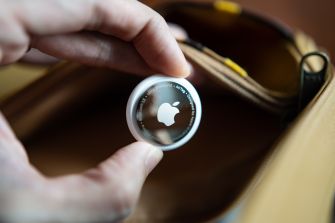
Two Michigan residents are suing Apple after allegedly being stalked with AirTags hidden in their vehicles, claiming the company knew its tracking devices could be misused and failed to provide adequate safeguards. The lawsuit, filed August 10 in federal court in Michigan, accuses Apple of negligence, defective product design, invasion of privacy and violations of the Michigan Consumer Protection Act.
Both residents are proceeding under pseudonyms and describe separate encounters with former romantic partners. A Birmingham woman alleges she was repeatedly tracked beginning in July 2026 and that her former partner appeared at locations without knowing where she planned to go. An AirTag was later found inside her vehicle, according to the lawsuit.
The second resident, from Madison Heights, alleges she was tracked after leaving a four-year abusive relationship in 2023. She moved to a new apartment without giving her former partner the address, yet he appeared at the building on the day she moved in, the lawsuit claims. About two weeks later, an AirTag was discovered beneath the back seat of her car.
Apple introduced the AirTag in 2021 as a small Bluetooth device designed to help people locate belongings through its Find My network. The company has since added protections intended to warn people when an unfamiliar tracker appears to be moving with them.
The Michigan residents argue those safeguards have fallen short. Their lawsuit claims Apple knew AirTags could be used for stalking and could have adopted stronger measures, including faster alerts, louder speakers that are harder to disable, and more effective detection across different phone platforms.
Those allegations place product liability law at the center of the dispute. A defective design claim can arise when someone argues that a consumer product created an unreasonable risk of harm and that a safer, workable design could have reduced that danger. Michigan law allows courts to consider whether a practical and technically feasible alternative was available when the product was made.
Negligence claims can also focus on whether a manufacturer could reasonably foresee a harmful use of its product and whether it took reasonable steps to reduce that risk. The Michigan residents contend that covert tracking was a foreseeable misuse of a small location device and that Apple had options for making that conduct more difficult.
Similar claims have already survived an early challenge in federal court. In 2024, U.S. District Judge Vince Chhabria allowed negligence and strict product liability claims brought by three alleged AirTag stalking victims to proceed against Apple in California. The ruling allowed those individuals to continue arguing that Apple's design choices contributed to their alleged injuries even though another person intentionally used the devices to track them.
The California litigation later faced a setback in its effort to proceed as a nationwide class action. In March, Chhabria declined to certify nationwide classes, finding that important issues varied among individual users and incidents. Additional lawsuits have since been filed by people alleging they were tracked with AirTags.
Lawyers representing alleged victims have now asked the U.S. Judicial Panel on Multidistrict Litigation to coordinate related federal cases before one judge for pretrial proceedings. The Michigan lawsuit is among the cases identified in that request. Centralizing related lawsuits can make discovery and other early proceedings more efficient when cases share common factual and legal questions.
The Michigan residents are also relying on the state's Consumer Protection Act, which prohibits unfair, deceptive, and unconscionable practices in trade or commerce. Their claim centers on Apple's statements about AirTag safety features and whether the company allegedly overstated how well those measures protected people from unwanted tracking.
Apple has continued to update those protections. In May 2024, Apple and Google introduced a system that allows compatible iPhones and Android devices to warn users when an unfamiliar Bluetooth tracker appears to be moving with them. Apple also introduced a second-generation AirTag in January 2026 with a louder speaker and additional unwanted tracking protections.
The timing of the two Michigan allegations spans different versions of Apple's safety system. The Madison Heights resident says she was tracked in 2023, before the cross-platform alert system was introduced. The Birmingham resident alleges she was tracked in July 2026, after those protections were in place.
Michigan law also makes it a crime in many circumstances to place a tracking device on another person's vehicle without consent. The civil claims against Apple focus on a separate issue: whether the company may bear responsibility for allegedly foreseeable misuse tied to the design and marketing of its product.
The residents are seeking damages and an order barring Apple from practices they characterize as unlawful or unfair in the design, manufacture, and sale of AirTags.