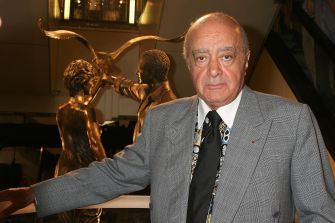
UK police reviewing sexual abuse allegations against late Harrods owner Mohamed Al-Fayed found that the accounts of 70 women bore the hallmarks of human trafficking, British lawmakers were told, expanding scrutiny of how women were recruited and moved through his businesses and properties.
Senior Metropolitan Police officers disclosed the findings during a July briefing to the All-Party Parliamentary Group for the Survivors of Al-Fayed and Harrods. The information became public on October 2, 2026.
Police said some women were moved from Harrods to Al-Fayed's private offices and residence on Park Lane in London, while others were taken elsewhere in Britain or overseas before alleged sexual abuse. At least five survivors have already been formally recognized by the UK Home Office as victims of domestic or international trafficking.
Police are examining movements between Harrods, Al-Fayed's London properties and locations abroad under the UK's Modern Slavery Act 2015, which defines trafficking to include arranging or facilitating a person's travel with a view to exploitation. The law applies to movement within Britain as well as across international borders.
That puts alleged transfers from Harrods to another London property within the same potential trafficking framework as journeys overseas when investigators are examining whether women were moved for sexual exploitation.
The Metropolitan Police investigation, known as Operation Cornpoppy, has questioned seven people under caution over suspected offenses including aiding and abetting rape and sexual assault, assisting sexual offenses and human trafficking for sexual exploitation. Al-Fayed died in 2023 at age 94, leaving investigators focused on people suspected of helping him commit or facilitate offenses.
Police have also sent prosecutors evidence involving a man in his 80s suspected of two indecent assaults against two women in London. The Crown Prosecution Service is considering whether charges should be brought.
One survivor, identified publicly as Amy, said she moved from the Harrods shop floor into a personal assistant role at Al-Fayed's Park Lane residence and office. She alleges that he sexually assaulted her and later had her taken by car and helicopter to his estate in Oxted, Surrey, where she says further abuse occurred.
The trafficking inquiry has also exposed a dispute over survivors living outside Britain. The Metropolitan Police paused referrals involving some overseas victims after the Home Office rejected submissions seeking recognition through the National Referral Mechanism, the UK system used to identify victims of modern slavery.
Independent Anti-Slavery Commissioner Eleanor Lyons has urged the government to reconsider restrictions affecting survivors overseas, calling the scale of potential trafficking connected to Al-Fayed "deeply shocking."
More than 500 women have come forward to survivor groups with allegations connected to Al-Fayed, while 165 have contacted the Metropolitan Police directly.
The allegations date to the period when Al-Fayed controlled Harrods and other businesses, including the Ritz hotel in Paris and Fulham Football Club. He owned Harrods from 1985 until 2010.
Harrods has condemned Al-Fayed's conduct and acknowledged that the company failed employees who were abused while he controlled the business.
Police continue to investigate people suspected of helping Al-Fayed commit or facilitate offenses, while prosecutors separately consider whether to charge the man in his 80s over the two alleged indecent assaults.