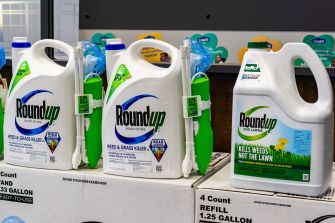
Monsanto urged a Missouri judge to approve a proposed $7.25 billion Roundup settlement that could resolve nearly all current and future U.S. cancer claims against the company, telling the court there is no other negotiated deal waiting if the agreement falls apart.
“This is the settlement,” Monsanto attorney James Bennett told Judge Timothy Boyer during a September 14 hearing in St. Louis. “There is not another settlement.”
The proposed nationwide class settlement would cover people exposed to Roundup before February 17, 2026, who developed non-Hodgkin lymphoma, along with people who receive a qualifying diagnosis years from now. Bayer, which acquired Monsanto in 2018, currently faces about 65,000 Roundup claims in state and federal courts.
Boyer heard arguments from supporters and opponents of the deal before reserving his decision. He invited additional filings through the end of the week and is expected to rule on final approval at a later date.
The hearing comes less than three months after the U.S. Supreme Court handed Monsanto a major victory that changed the legal landscape surrounding Roundup litigation.
In a 7-2 ruling in Monsanto Co. v. Durnell, the justices held that federal pesticide law preempts a Missouri failure-to-warn claim based on Monsanto selling Roundup without a cancer warning on its EPA-approved label. The decision focused on warning-label claims, leaving other product-liability theories to be litigated separately.
Its impact is already being felt in the settlement fight. Attorney Hunter Shkolnik told Boyer that 800 to 900 clients represented by his firm initially planned to opt out of the agreement but reconsidered after the Supreme Court ruling.
Monsanto has tied the court victory and the proposed class settlement together as part of its effort to contain years of Roundup litigation. Bennett told Boyer the company is prepared to continue fighting individual lawsuits if the settlement is rejected.
The agreement would create a long-term compensation program funded through declining annual payments from Monsanto over as many as 21 years. According to the official settlement website, eligible claimants could receive payments ranging from $6,000 to $165,000 or more, depending on factors including exposure history, age and diagnosis.
The reach of the agreement is central to the fight over final approval. Unlike settlements resolving a fixed group of pending lawsuits, the proposed class includes people who were exposed to Roundup before the February cutoff but have yet to develop non-Hodgkin lymphoma. Qualifying diagnoses could be covered for up to 16 years after final approval.
Opponents argued that the compensation structure gives too little to people facing serious cancer diagnoses and may bind future claimants before the extent of their injuries is known. Attorney T. Roe Frazer told the court relatively few people would receive payments near the top of the settlement structure.
Objectors have also challenged the Missouri court’s authority to approve a nationwide class and raised concerns over $675 million in attorneys’ fees sought by lawyers who negotiated the agreement.
A separate effort to move the settlement dispute into federal court recently ended at the 8th U.S. Circuit Court of Appeals. On August 27, the appeals court dismissed an attempt by objectors to challenge a federal judge’s decision returning the case to Missouri state court, clearing another obstacle before the September hearing.
Bayer maintains that Roundup and its active ingredient, glyphosate, do not cause cancer. The Environmental Protection Agency has found glyphosate unlikely to cause cancer under expected conditions of use, while the International Agency for Research on Cancer classified the chemical as probably carcinogenic to humans in 2015.
Roundup litigation has followed Bayer for years after its acquisition of Monsanto. The company committed roughly $10 billion in 2020 to resolve a large share of claims pending at the time, but additional lawsuits continued to arrive.
The current proposal is designed to address both existing claims and future diagnoses through one court-supervised system. Boyer granted the settlement preliminary approval in March.
Final approval now rests with Boyer following the September 14 hearing. Until he rules, the $7.25 billion settlement remains proposed, and the long-term claims program has yet to begin.