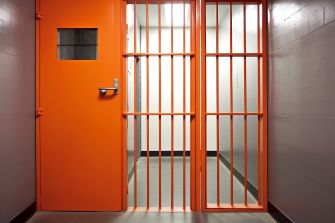
Six incarcerated plaintiffs throughout Pennsylvania filed a federal class action lawsuit against the Pennsylvania Department of Corrections that would seek to end the indefinite use of solitary confinement. The lawsuit claims the practice is a violation of an inmate's constitutional rights.
Solitary confinement is a form of short-term isolation inmates can be subjected to. This tactic is often used as a form of punishment for inmates who breach prison policy or protocol. Other actions that can result in solitary confinement include inmates violating rules, engaging in violent behavior, or not following an officer's orders. The class action lawsuit argues that regardless of the reason that lands an inmate in solitary confinement, the practice is being misused and prompts mental health concerns among inmates.
The lawsuit alleges six counts, two of which include violations of the Eighth Amendment and Cruel and Unusual PunishmentThe Eighth Amendment to the U.S. Constitution prohibits excessive bail, excessive fines, and cruel and unusual punishments. Its Cruel and Unusual Punishments Clause limits the types and severity of punishment the government may impose, including conditions of confinement and methods of execution.Read more →, an individual's protection from cruel and unusual punishment, and a violation of the American Disabilities Act. Lawyers representing the plaintiff say the Department of Corrections is punishing people for symptoms of mental illness, and if they do receive visitation for mental health care, the care is provided through the single slot where food gets passed from prison staff to the inmate and lasts mere seconds.
The lawsuit says individuals who are incarcerated have suffered significantly increasing mental health struggles, struggles that are compounded by the use of solitary confinement. One plaintiff, 35-year-old Khalil Hammond, has spent 12 years in solitary confinement. Hammond also has a documented history of mental health illness which has worsened during his time in solitary. As a result, he has attempted suicide at least eight times and is ineligible to participate in programs that could help him qualify for parole.
In a statement accompanying the lawsuit, Hammond writes, “Solitary confinement is killing us. If you didn’t have mental health issues before going in, you do once you’re in the hole.” His statement adds, “Imagine being locked in a cage for years and years without ever knowing when you’ll get out.”
Another plaintiff, 29-year-old Malika Henderson, has been in solitary confinement for over 22 months at State Correctional Institution at Muncy. In total, she has spent an estimated six years in solitary confinement. While in solitary, she was unable to attend the funeral of her grandmother who passed away in February and has attempted suicide. Henderson shares in a statement, “I’m suffering but I know with this lawsuit I’m not just fighting for me, I’m fighting for the thousands of men and women who are in solitary just like me and who need to get out.”
Saleem Holbrook, the executive director of the Abolitionist Law Center, represents one of several law firms involved in the case. Holbrook shares, “Ending solitary confinement is necessary on grounds of humanity and as a matter of public health.” He adds, “The damage and devastation incarcerated people experience in solitary confinement has long-term and widespread consequences impacting individuals, families, and the communities those individuals return home to.”
While Holbrook calls this case a historic filing, it is not the only lawsuit of its kind. A similar lawsuit was filed In October 2023 that argued the state's solitary confinement practices have worsened and contributed to the increasing mental health rates of inmates.
Members of the state legislature are currently working on reforming how solitary confinement is implemented in the state and are seeking to protect vulnerable populations, including inmates who have a mental health diagnosis.
Share This Article
If you found this article insightful, consider sharing it with your network.
Nadia El-Yaouti is a postgraduate from James Madison University, where she studied English and Education. Residing in Central Virginia with her husband and two young daughters, she balances her workaholic tendencies with a passion for travel, exploring the world with her family.
A federal judge has ruled that the agencies overseeing parole and supervised release in Washington, D.C., violated federal disability law by failing to provide a meaningful system for accommodations, putting people with disabilities at risk of sanctions and incarceration when their conditions made it harder to follow supervision rules.U.S. District...
Read
More »
The family of Donald Maier, a Wisconsin inmate who died from dehydration and malnutrition while held in solitary confinement at Waupun Correctional Institution, has reached a $3.75 million settlement with the Wisconsin Department of Corrections.Maier’s mother filed the wrongful death and civil rights lawsuit in April 2025 in federal court....
Read
More »
The state of Pennsylvania is considering an amendment to the state constitution that would create a two-year window of opportunity to allow victims of childhood sexual abuse (many of whom lost the right to sue when they turned eighteen) to file suit against their alleged abusers, regardless of expired statutes...
Read
More »
Three women have joined a lawsuit challenging Maine’s policy of housing inmates based on gender identity, adding new allegations involving sexual harassment, threats, and retaliation at the Maine Correctional Center in Windham.Jennifer Albert, Michaela Sargent, and Danielle Foster joined original plaintiff Katie Mountain in the lawsuit against Maine Department of...
Read
More »
On November 16, 2020, the United States Supreme Court ruled that a geriatric prison in southeast Texas will not be required to enact basic safety measures to prevent the spread of COVID-19 among its inmates. This lawsuit was filed on March 30, 2020, brought by the inmates at the Wallace Pack...
Read
More »
We use cookies and similar technologies to help our website function, understand how visitors use our site, and improve your experience. Some cookies are necessary for the website to operate, while others may be used for analytics or advertising.