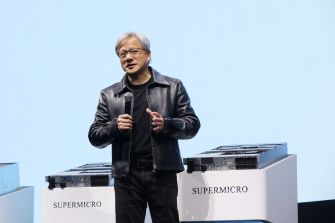
Nvidia CEO Jensen Huang resigned Thursday, November 12, 2026, amid allegations involving his affair with a suspected Chinese spy, as the chipmaker faces a shareholder lawsuit, federal scrutiny of its chip exports and congressional demands for information about its dealings with China.
The company appointed Chief Financial Officer Colette Kress as interim CEO and longtime director Harvey C. Jones as its first board chairman. Huang, who co-founded Nvidia in 1993, stepped down as president, chief executive and a board member, effective immediately, ending more than three decades leading the company.
Nvidia shares plunged as much as 14% at Thursday's opening before recovering part of their losses. The departure rattled investors already concerned about the company's exposure to U.S. export restrictions and investigations involving its business relationships in Asia.
Huang's resignation followed reports that he had an affair with Alice Huang, a former executive of Singapore-based Megaspeed International whom U.S. intelligence officials reportedly identified as a Chinese intelligence asset. Separate reporting also alleged that Huang had an intimate relationship with a female Nvidia executive who reported to him.
Huang acknowledged being unfaithful to his wife in a November 8 message to employees and pledged to cooperate with an independent board investigation into the reported foreign intelligence operation.
Nvidia's directors said they had no reason to believe company secrets or U.S. national security had been compromised. The board subsequently retained former acting U.S. Attorney Joon H. Kim and the law firm Wachtell, Lipton, Rosen & Katz to investigate the allegations. The company has announced no findings from that inquiry.
Megaspeed has been under federal scrutiny over allegations that it helped Chinese customers obtain restricted Nvidia technology through data centers in Southeast Asia. U.S. officials have investigated whether the company facilitated access to advanced artificial intelligence chips and computing power in violation of American export controls.
A shareholder sued Nvidia and Huang on November 9 in federal court in San Jose, California, accusing them of misleading investors about the relationship and its potential national security consequences. The proposed class action, filed by Mark Kistenmacher, alleges that Nvidia concealed material risks while publicly defending its dealings with Megaspeed.
Congressional inquiries have also expanded. On November 11, Democratic Senators Elizabeth Warren of Massachusetts and Chris Coons of Delaware asked the Commerce Department, State Department and White House to preserve records involving Nvidia's AI chip exports to China and the suspected intelligence operation. The senators requested written confirmation by November 17 that preservation orders had been issued.
Three Republican House committee chairmen, Brian Mast, John Moolenaar and Eric Crawford, previously requested that Huang appear for a closed-door briefing on November 18 concerning his interactions with Alice Huang and Nvidia's safeguards against foreign espionage. His resignation leaves the status of that requested appearance uncertain.
Senator Michael Bennet of Colorado separately demanded an update on the federal investigation into Megaspeed, including whether the government had considered restricting the company's access to American technology. His November 11 letter requested answers by November 24.
Megaspeed has denied wrongdoing and said it is cooperating with U.S. authorities. The company has retained American legal counsel to review its inventory and compliance with export restrictions.
Nvidia's board has begun searching for a permanent chief executive while Kress continues serving as finance chief. The company is scheduled to report its quarterly earnings on November 17, with congressional deadlines concerning its China operations and the alleged intelligence operation approaching in the following days.