OpenAI, Anthropic, Google and SpaceXAI have been hit with a federal antitrust lawsuit accusing the rival artificial intelligence companies of illegally agreeing to slow development of ChatGPT, Claude, Gemini and Grok in the name of AI safety.
Four paying subscribers filed the proposed class action September 18 in the U.S. District Court for the Northern District of California. They claim the companies coordinated how quickly their competing AI products would improve, leaving customers paying the same subscription prices while receiving slower advances.
The case grew out of a September 12 essay from Anthropic CEO Dario Amodei calling on leading AI companies to “pace the frontier” as increasingly capable models raise concerns about cybersecurity, loss of control and other risks.
Amodei proposed coordination among frontier developers, independent safety evaluations and broader international cooperation. He argued that an industry-wide approach could give companies more time to strengthen safeguards without leaving one developer at a competitive disadvantage.
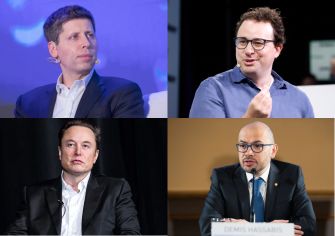
OpenAI CEO Sam Altman and Elon Musk, who leads SpaceXAI, publicly expressed support for parts of the proposal that day. Google DeepMind co-founder Demis Hassabis also responded favorably to greater cooperation around AI safety, according to the complaint.
Antitrust concerns were already part of that exchange. Amodei suggested some discussions among competitors could require a narrow government exemption covering AI safety coordination. Altman responded that OpenAI supported a federal safety framework but believed companies could begin some of that work before an exemption was in place.
The complaint cites those public exchanges as evidence that the companies moved from discussing shared safety concerns to an alleged agreement to restrain AI development. Section 1 of the Sherman Act prohibits agreements among separate companies that unlawfully restrict competition, making evidence of an actual agreement central to the case.
The alleged slowdown would restrict how quickly new capabilities reach paying users, according to the complaint. The subscribers claim they would continue paying for ChatGPT, Claude, Gemini and Grok while receiving products that improve more slowly than they would under independent competition.
Charles Buist, Cheyenne Hunt, Christine Bullock and Nick Spetsas brought the case on behalf of a proposed nationwide class of people who purchased individual paid subscriptions to the four services beginning September 12. They also seek separate subclasses for customers of each company.
The subscribers are asking the court to bar the companies from coordinating limits on AI training, product releases, or other development decisions. The proposed order would still allow each company to adopt its own safety measures, conduct research and comply with government requirements. They also seek damages that can be tripled under federal antitrust law, attorneys’ fees and other relief.
The case is before U.S. Magistrate Judge Nathanael M. Cousins in the Northern District of California. OpenAI, Anthropic, Google and SpaceXAI have yet to file substantive responses to the complaint.