Federal prosecutors are urging a judge to reject rapper Pooh Shiesty's emergency request for relief from 23-hour daily jail isolation, arguing that security concerns justify his confinement while he awaits trial in a federal criminal case involving Gucci Mane.
In an October 20, 2026, filing, the government disputed allegations that Shiesty, whose legal name is Lontrell Williams Jr., is being subjected to inhumane conditions at Rolling Plains Regional Jail in North Texas. Prosecutors cited concerns about his safety and jail operations, along with extensive access to electronic communication and entertainment, as grounds for denying his request.
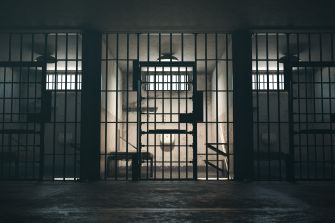
Williams' attorneys filed an emergency motion on October 15, alleging that he spends approximately 23 hours each day alone in his cell and has experienced worsening anxiety, disrupted sleep and difficulty concentrating. They also challenged a reduction in his monthly in-person visitation allowance from four hours to two.
The defense argues that prolonged isolation is causing psychological harm while Williams awaits trial and remains legally presumed innocent. His attorneys contend that access to electronic devices does little to address the effects of spending nearly the entire day physically separated from other people.
Prosecutors countered with records showing that Williams had sent or received 12,342 emails since July 1 and participated in 231 video visits totaling approximately 45 hours. They also submitted roughly 500 pages of tablet activity records documenting his access to games, music, Netflix and the NFL Channel.
The government maintains that those privileges contradict his characterization of the confinement as inhumane. It also disputed the visitation complaint, stating that Williams receives the same in-person visitation opportunities as other federal detainees at the facility and had received no in-person visits since August 27.
Security concerns form another part of the prosecution's argument. According to the filing, three other inmates allegedly attempted to enter Williams' cell to obtain his autograph, prompting concerns about his safety. Prosecutors also cited his alleged ability to disrupt normal jail operations.
Their response referenced alleged misconduct at a previous halfway house, where Williams was staying before his April arrest, and claimed that he had acknowledged recently ingesting fentanyl. The filing offered limited public detail about the circumstances of that alleged drug use.
Defense attorney Kent Schaffer questioned those accusations and challenged the government's justification for keeping Williams separated from other detainees. He maintained that the rapper had received no disciplinary citations at Rolling Plains and disputed the need for such extensive restrictions.
Federal law prohibits punishing pretrial detainees before conviction under the Fifth Amendment's Due Process Clause, although detention facilities may impose restrictions reasonably related to safety, security and daily operations. Williams' attorneys argue that the length and severity of his isolation exceed those legitimate needs, while prosecutors maintain that the restrictions are justified by the circumstances of his detention.
The 26-year-old Memphis rapper was arrested in April 2026 in connection with an alleged January confrontation involving Gucci Mane, whose 1017 Records label signed him in 2020.
Federal prosecutors allege Williams and several co-defendants arranged a meeting with Gucci Mane in Dallas, where the rapper was confronted at gunpoint over a recording contract. According to the government, Williams used an AK-style firearm to force Gucci Mane to release him from the agreement while other participants took jewelry and cash.
Williams was charged alongside his father, Lontrell Williams Sr., fellow rapper Big30, whose legal name is Rodney Lamont Wright Jr., and other alleged participants. The charges remain pending, and prosecutors say Williams could face a sentence ranging from 30 years to life if convicted as charged.
The judge has yet to rule on Shiesty's emergency motion challenging his detention conditions. His criminal trial is scheduled to begin February 22, 2027, in federal court in Dallas.