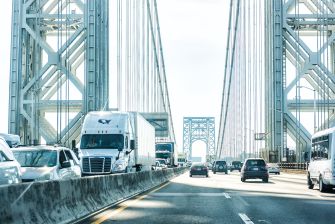
The Port Authority of New York and New Jersey has agreed to pay $10.5 million to a motorist who suffered permanent brain injuries when a steel truck part crashed through his windshield on the George Washington Bridge.
Joseph Rosario was driving west toward New Jersey on the bridge’s upper level on March 2, 2020, when the metal object pierced the windshield and struck him in the head. Court records state that Rosario, then 28, was left comatose and underwent emergency brain surgery. His lawsuit claimed the traumatic brain injury caused lasting cognitive and physical disabilities, disfigurement and loss of bodily function.
The Port Authority reached the settlement on May 8, 2026. Skanska Koch Inc. and El Sol Contracting, two construction companies working on the bridge at the time of the crash, settled separately for undisclosed amounts.
Port Authority police identified the object as a leaf spring, a steel component used in a truck’s suspension system. Investigators reviewed surveillance footage, interviewed witnesses and inspected several trucks traveling near Rosario when he was injured.
No evidence linked the leaf spring to any of the vehicles police examined. Video reviewed during the investigation appeared to show an object consistent with the truck part already lying in the roadway before the crash. Police concluded that the incident appeared accidental and closed the criminal investigation without determining where the debris came from.
Rosario’s attorney, Edward Capozzi, said available footage showed the object had been on the roadway for at least 10 minutes and 49 seconds. Court filings also cited earlier crashes involving vehicles striking large debris on the George Washington Bridge, which Rosario’s legal team argued showed that the danger was not an isolated event.
Bridge logs showed that crews typically swept the roadway several times each week and regularly removed enough material to fill multiple dump trucks, according to court filings. Rosario’s lawyers claimed the amount of debris collected should have prompted more targeted inspections based on where and when objects were most likely to accumulate.
Records cited in the case stated that the upper level experienced more debris than the lower level but was swept at the same frequency. No regular daytime sweep was conducted around the time Rosario was injured at approximately 10:42 a.m., the filings state.
Capozzi also questioned the Port Authority’s record-keeping practices. He claimed workers repeatedly entered broad descriptions into the agency’s software rather than recording each object collected and where it was found, limiting the agency’s ability to identify areas with recurring debris problems.
Roadway operators may be held responsible for a dangerous condition when they knew about it or should have discovered it through reasonable inspections. The second form of knowledge, called constructive notice, can depend on how long a hazard was present and whether similar problems had occurred before. Rosario’s lawyers argued that the video, earlier debris crashes and maintenance records gave the Port Authority enough warning to find and remove the leaf spring. The police finding that the crash appeared accidental did not decide that question because civil negligence does not require proof that anyone intended to cause harm or committed a crime.
The Port Authority said its cleaning trucks sweep the bridge in both directions, remove debris, clear clogged basins and conduct regular roadway surveys. The agency did not detail whether its sweeping or record-keeping practices changed after Rosario was injured.
The agreements ended the case three days before trial was scheduled to begin.