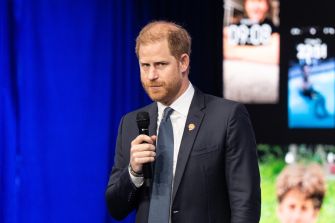
Prince Harry, Elton John and five other public figures have been ordered to pay £9.54 million, about $13 million, toward the legal costs of the Daily Mail’s publisher after losing their privacy case against the company.
High Court Justice Matthew Nicklin ordered the interim payment to Associated Newspapers by August 28. He also ruled that most of the publisher’s recoverable costs should be assessed on an indemnity basis, a standard that can leave the losing side responsible for a greater share of its opponent’s legal expenses.
Nicklin said the way the claims were brought and pursued went beyond the ordinary course of civil litigation. He pointed to the broad and partly speculative nature of some allegations, serious accusations that lacked sufficient supporting evidence and claims that remained in the case even as the evidence changed.
The judge found that the combined conduct was “unreasonable to a high degree.” He did not find that Harry or any of the other six individuals had acted dishonestly and accepted that they had genuine concerns about how private information about them reached Associated’s newspapers.
The August 21 costs order follows Nicklin’s July 7 dismissal of claims brought by Harry, John, Baroness Doreen Lawrence, Elizabeth Hurley, David Furnish, Simon Hughes and Sadie Frost. The seven had accused Associated of obtaining private information through unlawful methods, including phone hacking and the use of private investigators. Associated denied wrongdoing.
After an 11-week trial, Nicklin found that they had not proved that the information challenged in their claims had been obtained unlawfully. Suspicion about newspaper practices or evidence concerning the use of private investigators was not enough without proof connecting unlawful conduct to the specific information at issue.
The latest ruling raises a separate legal issue over what happens when a court concludes that litigation was pursued in an unusually unreasonable way. English courts can require the losing side in a civil case to contribute to the winner’s legal costs. Those expenses are normally assessed on the standard basis, meaning they must be reasonable and proportionate, with doubts generally resolved in favor of the party required to pay.
Indemnity costs apply a stricter standard for the losing side. The expenses must still be reasonably incurred and reasonable in amount, but proportionality does not provide the same limit, and doubts over reasonableness are generally resolved in favor of the party recovering the money.
Courts do not award indemnity costs simply because someone loses a lawsuit. The higher standard is generally reserved for circumstances or conduct outside the normal range of civil litigation. Nicklin concluded that the way the allegations were developed, maintained and presented justified applying that standard to most of Associated’s costs.
The size of the publisher’s bill remains unresolved. Associated says its legal expenses reached approximately £34.5 million, or about $47 million. Nicklin described the figure as exceptionally high and said it appeared excessive, but declined to impose a fixed ceiling before the expenses undergo a detailed review.
Harry and the others have not been ordered to pay the full £34.5 million. If the two sides cannot agree on what Associated can recover, a costs judge will examine the bill and determine which expenses were reasonably incurred and reasonable in amount. Unnecessary, duplicated or otherwise unreasonable charges can still be rejected under the indemnity standard.
The £9.54 million due August 28 is an initial payment while the final costs are determined. How that amount and any additional costs will ultimately be divided among the seven individuals has not yet been resolved.
The court was previously told that the group has combined insurance coverage of approximately £16.2 million for legal costs. The amount claimed by Associated is more than twice that figure, although the publisher will not necessarily recover everything it spent.
Associated Newspapers called the ruling a victory for the Mail and its journalism and said the claims should not have been brought. Harry’s spokesperson did not comment on the August 21 decision. Harry and Lawrence criticized the July dismissal after it was issued, calling the ruling a “complete and obvious whitewash.”
The £9.54 million interim payment is due August 28. The final amount of Associated’s recoverable legal costs has not been determined, and the parties have until October 2 to seek permission to appeal the trial judgment or the costs ruling.