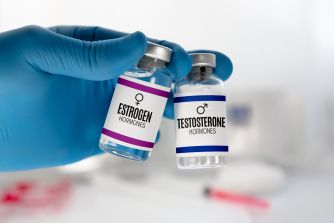
The Supreme Court on Wednesday rejected the Trump administration’s request to immediately restore restrictions on gender-affirming care in federal prisons, leaving in place a lower-court order that protects access to hormone therapy and other accommodations while the case continues.
The October 21, 2026, decision does not determine whether the Federal Bureau of Prisons policy is ultimately lawful. It means the restrictions cannot take effect while the administration continues its appeal. Justices Clarence Thomas and Samuel Alito indicated that they would have granted the government’s emergency request, while the Court otherwise issued its order without explanation.
The dispute stems from President Donald Trump’s January 20, 2025, executive order directing federal agencies to restrict spending on certain treatments intended to align a prisoner’s physical appearance with gender identity. The order instructed the Justice Department to revise Bureau of Prisons policies governing medical care and accommodations for transgender inmates.
In February, the Bureau of Prisons adopted a policy that generally barred new hormone prescriptions for gender dysphoria and required inmates already receiving hormones to begin individualized tapering plans. It also prohibited gender-related surgeries and ended accommodations involving certain clothing, makeup, hair-removal products, and other items, subject to limited exceptions.
Gender dysphoria is a recognized medical condition involving clinically significant distress or impairment associated with an incongruence between a person’s gender identity and sex-related characteristics. The condition can involve serious mental-health effects, and the litigation has focused in part on whether withdrawing previously prescribed treatment could worsen those symptoms for federal prisoners receiving care.
Three transgender prisoners challenged the administration’s actions in federal court, arguing that the new policy would interrupt medically prescribed treatment and expose them to serious physical and psychological harm. Their lawsuit later became a class action covering federal prisoners diagnosed with gender dysphoria who are affected by the restrictions.
In 2025, the Bureau of Prisons told the court that roughly 628 of 1,028 inmates diagnosed with gender dysphoria were receiving hormone therapy. Hormone treatment had been available to qualifying federal prisoners for decades before the administration changed the policy.
U.S. District Judge Royce Lamberth initially blocked portions of the restrictions in June 2025. After the Bureau of Prisons adopted its revised policy in February 2026, he issued an updated preliminary injunctionA preliminary injunction is a temporary court order issued before a case is finally decided that requires a party to take or stop an action while the litigation continues. Federal courts generally consider the likelihood of success, irreparable harm, the balance of equities, and the public interest before granting one.Read more → on June 17.
Lamberth found that the prisoners were likely to succeed on their claim under the Administrative Procedure Act because the agency had not adequately accounted for its prior experience, relevant medical evidence, and the consequences of withdrawing treatment. He did not decide the plaintiffs’ separate constitutional claims at that stage.
The Administrative Procedure Act requires federal agencies to consider relevant evidence and provide a reasoned explanation for significant policy changes. A court can set aside agency action that it finds “arbitrary and capricious,” including when officials fail to address important evidence or explain a departure from an earlier position.
In the district court record, physicians and prisoners described worsening gender dysphoria, depression, anxiety, self-harm risk and other effects associated with withdrawal of treatment. Lamberth found the evidence sufficient at the preliminary-injunction stage to support a finding that affected prisoners faced a risk of irreparable harm if the new policy took effect.
The Trump administration defended the restrictions as a medical, administrative and security decision within the authority of federal prison officials. Government lawyers argued that the Bureau of Prisons had reviewed medical studies, security considerations and expert opinions before determining that psychotherapy and psychiatric care should be prioritized instead of certain gender-affirming interventions.
Lamberth found that explanation insufficient on the record before him, concluding that the agency had not adequately addressed its previous experience providing treatment or medical evidence that pointed in a different direction.
The litigation also involves a separate dispute over how long federal courts can maintain temporary relief in prison cases. Under the Prison Litigation Reform Act, preliminary injunctions affecting prison conditions are subject to additional limits and can expire unless a court makes the findings required to continue them.
Because of those restrictions, Lamberth reissued the preliminary injunction on August 26. On September 18, a divided panel of the U.S. Court of Appeals for the District of Columbia Circuit refused to suspend that order while the administration pursued its appeal.
The D.C. Circuit majority concluded that the government had not made a strong enough showing that it was likely to prevail on its argument that the Bureau of Prisons had adequately considered its previous experience providing gender-affirming care.
Circuit Judge Justin Walker dissented, focusing largely on the Prison Litigation Reform Act. He questioned whether the district court could continue reissuing temporary injunctions in a way that effectively extended relief beyond the limits Congress established for federal prison litigation.
The administration then sought emergency intervention from the Supreme Court, asking the justices to allow the Bureau of Prisons restrictions to take effect while the appeal continued. The Court’s October 21 denial leaves the lower-court injunction intact for now.
For federal prisoners covered by the injunction, that means hormone medications and certain social accommodations remain available under the earlier Bureau of Prisons framework while the litigation proceeds. The decision does not require the Supreme Court to ultimately accept or reject the administration’s policy, and it does not resolve the broader legal questions surrounding gender-affirming care in federal prisons.
The lower courts must still decide whether the Bureau of Prisons lawfully adopted its 2026 restrictions. The Supreme Court’s refusal to intervene at this stage preserves the existing treatment protections while that question remains unresolved.
Share This Article
If you found this article insightful, consider sharing it with your network.
Dr. Virginia Tjan, MD, is a physician and Law Commentary journalist who brings a medical perspective to reporting on healthcare, patient care, and issues at the intersection of medicine and the law. Her clinical work focuses on the diagnosis and treatment of complex cancers, with particular experience in breast cancer, lung cancer, colorectal cancer, and multiple myeloma. She has worked with patients throughout the course of cancer care, from initial diagnosis through treatment of advanced disease, including chemotherapy, infusion therapy, diagnostic monitoring, and the management of treatment-related complications. Through her contributions to Law Commentary, Dr. Tjan helps readers better understand medical developments and healthcare issues that carry legal, regulatory, and public policy implications.
The Trump administration asked the Supreme Court on Monday to let federal prisons restrict hormone therapy and gender-affirming surgery for transgender inmates, seeking to enforce the policy after two lower courts refused to clear the way.The Justice Department filed an emergency request asking the justices to lift an injunction from...
Read
More »
The Supreme Court on Tuesday cleared the Trump administration to resume deporting migrants to countries other than their own while the justices prepare to decide whether the policy violates federal law and constitutional due process protections.The unsigned September 29 order puts on hold a federal court judgment that required migrants...
Read
More »
The Trump administration is asking the Supreme Court to clear the way for the Pentagon to discharge transgender servicemembers who remain protected from its military ban, returning the policy to the justices after they allowed broader enforcement last year.Solicitor General D. John Sauer filed a petition Friday asking the Court...
Read
More »
The Supreme Court on Thursday kept current nationwide access to the abortion medication mifepristone in place, blocking lower court limits that would have required in-person doctor visits and halted distribution through the mail while the case moves forward.
Louisiana initially filed a lawsuit seeking to roll back Food and Drug...
Read
More »
In the country’s first ruling on the constitutionality of a controversial “gender transition” law, a U.S. District Court Judge in Arkansas has ruled that a state law that prohibits medical professionals from providing “gender transition” care to youths is unconstitutional.
In 2021, Arkansas passed a law that prohibited medical professionals...
Read
More »
We use cookies and similar technologies to help our website function, understand how visitors use our site, and improve your experience. Some cookies are necessary for the website to operate, while others may be used for analytics or advertising.