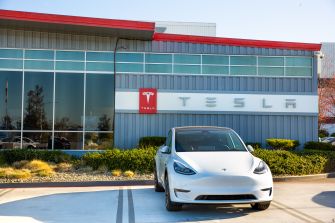
Tesla went to trial Monday in California over allegations that Black workers at its Fremont factory endured years of racial harassment and discrimination while the company failed to stop it.
The case was brought by the California Civil Rights Department, which accuses the electric vehicle manufacturer of allowing racial slurs, racist graffiti, and other harassment to become widespread at the Fremont assembly plant. The state also alleges that Black employees were concentrated in more difficult and lower-paying jobs, received less compensation, and had fewer opportunities for promotion. Tesla denies wrongdoing and has said it does not tolerate discrimination.
The trial began September 21 in Alameda County Superior Court in Oakland before Judge Peter Borkon and is scheduled to continue through October 30. It is a bench trial, meaning Borkon, rather than a jury, will hear the evidence and decide whether Tesla violated California employment law.
For the workers involved, the case reaches well beyond offensive words written on a wall or spoken on a factory floor. California’s allegations describe a workplace where race allegedly affected everyday experiences — the jobs people received, what they were paid, whether they advanced and what happened when they complained.
The Civil Rights Department filed the lawsuit in 2022 after what it described as a nearly three-year investigation prompted by hundreds of worker complaints. The agency sued under California’s Fair Employment and Housing Act, commonly known as FEHA, and the California Equal Pay Act.
According to the state, Black workers were routinely subjected to racial slurs by coworkers and, in some instances, supervisors and managers. The amended complaint also describes racist graffiti in bathrooms, elevators, and other common areas, including swastikas and other hate symbols.
The state says some employees referred to the Fremont plant as a “plantation” and Black workers as “slaves.” Those allegations remain disputed and will be among the evidence considered at trial.
California’s case also extends beyond harassment. The department alleges that Black employees were disproportionately assigned labor-intensive work, received harsher discipline, earned less, and were less likely to move into management and other higher-level positions.
An analysis cited by the Civil Rights Department found that Black employees earned an average of $1,533 less per month than white employees between June 2018 and June 2024. The state says those disparities form part of a broader pattern of unequal treatment rather than isolated employment decisions.
Tesla has consistently disputed the state’s characterization of its workplace. The company has said it investigates complaints, disciplines or fires employees found to have engaged in misconduct and does not tolerate racial harassment or discrimination.
That disagreement will now move from allegations and pretrial motions to evidence presented in court. The case reached trial after Borkon rejected Tesla’s effort earlier this year to dispose of the state’s claims before trial. In May, the court found that the evidence presented enough factual disputes over alleged harassment, discrimination and retaliation to require a trial.
California also accuses Tesla of retaliating against Black workers who complained about workplace conditions. The department says employees who raised concerns faced harsher performance reviews, reprimands, or termination. Tesla disputes those allegations as well.
Retaliation is legally separate from the underlying discrimination claim. California employment law generally protects workers who report or oppose conduct they reasonably believe violates workplace discrimination laws, meaning an employer can potentially face liability for retaliation even when the underlying complaint itself remains disputed.
The Fremont factory has been at the center of race-discrimination litigation for years. One of the most prominent cases involved Owen Diaz, a Black former contract elevator operator who alleged that he was repeatedly subjected to racial slurs and other harassment while working at the Fremont facility. A federal jury initially awarded Diaz nearly $137 million in 2021. A judge later reduced that award, and a second jury awarded him approximately $3.2 million in 2023. Tesla and Diaz eventually reached a confidential settlement.
The Diaz litigation involved an individual worker and different legal claims. California’s current case is broader, with the state alleging systemic practices affecting Black employees across Tesla’s workforce.
Hundreds of current and former workers are also pursuing related private litigation involving the Fremont factory. In June, a California appeals court allowed approximately 440 former employees to continue pursuing their claims through several jointly filed lawsuits after disputes over how those workers could proceed following earlier class-action litigation.
The U.S. Equal Employment Opportunity Commission has brought a separate federal lawsuit against Tesla alleging that Black employees at Fremont experienced severe or pervasive racial harassment beginning in 2015. A federal judge previously rejected Tesla’s attempt to dismiss or stay that case.
Those lawsuits do not establish that Tesla is liable in California’s case. Each action involves its own plaintiffs, claims, evidence, and legal standards. Together, however, they show how long allegations involving racial conditions at the Fremont factory have remained in litigation.
The state case could also carry substantial financial consequences.
Federal employment discrimination law under Title VII limits certain compensatory and punitive damages based on the size of the employer. For companies with more than 500 employees, the combined federal cap for those categories is $300,000 per complaining party, although back pay, front pay, and certain other remedies are treated separately. Race-discrimination claims brought under other federal statutes can also operate under different rules.
California’s FEHA does not impose Title VII’s statutory caps on compensatory and punitive damages. State law permits remedies that can include back pay, front pay, emotional-distress damages, punitive damages, reinstatement or promotion, policy changes, and attorney fees when the legal requirements for those remedies are established.
That difference could become important if California proves its claims and the case moves to determining relief. The Civil Rights Department’s complaint seeks both monetary remedies for affected workers and court orders aimed at changing allegedly discriminatory employment practices.
The state would still have to prove that Tesla violated California law and establish the basis for any damages or other relief sought. Punitive damages, in particular, require findings beyond the existence of ordinary discrimination and remain subject to other legal limitations.
For workers, workplace discrimination cases can be difficult because the evidence often develops over years and through experiences that are not identical from employee to employee. One person may describe a racial slur. Another may point to a promotion denied, a disciplinary decision, or a difference in pay. The larger legal question can become whether those individual experiences reveal a broader workplace pattern.
California says they do at Fremont.
Tesla says the allegations misrepresent its workplace and its response to employee complaints.
Over the coming weeks, Borkon is expected to hear testimony and review company records, worker accounts, employment data, and other evidence before deciding which version the record supports.
The trial also arrives during a period when questions about workplace equality and corporate diversity policies have become part of a much broader national legal debate. The issues before the Alameda County court are more specific: whether Tesla violated California civil-rights and equal-pay laws in its treatment of Black workers.
For the employees whose experiences are at the center of the case, the outcome could determine whether the conduct they have described for years is recognized by a court as unlawful discrimination.
For Tesla, the trial presents an opportunity to challenge the state’s portrayal of one of its most important factories and defend practices the company says complied with the law.
After more than four years of litigation, those competing accounts are now being tested at trial.