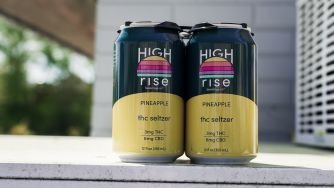
Hemp-derived THC gummies and beverages legally sold under state law in parts of the country could lose their status as hemp under federal law this fall under a new definition Congress adopted last year.
The change is scheduled to take effect Nov. 12 and would exclude finished hemp-derived cannabinoid products containing more than 0.4 milligrams of total THC and certain similarly acting cannabinoids per container from the federal definition of hemp. The threshold is far below the amount of THC permitted in some state-regulated gummies and drinks.
Congress approved the new definition as part of Public Law 119-37, a government funding law signed Nov. 12, 2025. The measure gave the hemp industry one year before the restrictions take effect. It also excludes certain cannabinoids that are synthesized or manufactured outside the cannabis plant.
The 2018 Farm Bill removed hemp from the federal Controlled Substances Act by defining it largely through a concentration limit of no more than 0.3% delta-9 THC on a dry-weight basis. That standard helped create a national market for gummies, beverages, and other products that met the percentage requirement but could still contain intoxicating amounts of THC.
The new law changes the calculation for finished cannabinoid products. Instead of relying only on THC concentration, it imposes a 0.4-milligram limit across the entire retail container. A package containing several gummies with 5 or 10 milligrams of THC in each would exceed the federal threshold many times over.
Products that meet the current federal hemp definition remain outside the Controlled Substances Act through Nov. 11. Beginning Nov. 12, products that fail to meet the amended definition would no longer qualify for the federal hemp exemption unless Congress changes the law.
The impact could vary widely by state.
California has already restricted intoxicating hemp products sold outside its licensed cannabis system. Emergency regulations adopted in 2024 prohibited detectable THC in industrial hemp foods, beverages, and dietary supplements sold in the general retail market. Assembly Bill 8, signed in October 2025 and effective Jan. 1, continued that approach by providing that industrial hemp extract used in foods, beverages and dietary supplements cannot contain THC or synthetic cannabinoids.
THC-containing cannabis products remain available through California’s separately regulated cannabis market. The federal change may have less effect on ordinary retail sales there because the state has already removed intoxicating hemp products from those channels.
Minnesota has taken a different approach.
The state allows lower-potency hemp edibles containing up to 5 milligrams of delta-9 THC per serving and 50 milligrams per package. Single-serving hemp beverages can contain as much as 10 milligrams of delta-9 THC.
Those products can comply with Minnesota law while substantially exceeding the coming federal limit of 0.4 milligrams per container.
Minnesota officials and members of the state’s congressional delegation have argued that the federal change could disrupt a market the state chose to regulate rather than prohibit. Sen. Amy Klobuchar, D-Minn., helped secure language in a Senate funding bill this month that would postpone most of the federal hemp restrictions until Dec. 11 while lawmakers consider a longer-term regulatory approach.
Florida continues to regulate hemp largely through the percentage-based system that developed after the 2018 Farm Bill.
State law defines hemp as cannabis and its derivatives containing no more than 0.3% total delta-9 THC on a dry-weight basis, with hemp extract subject to a 0.3% limit on a wet-weight basis. Hemp extract must meet testing, labeling, and packaging requirements, and ingestible or inhalable products cannot be sold to anyone under 21.
Florida lawmakers considered additional restrictions during the 2026 legislative session, but major proposals did not become law. House Bill 1409, which would have expanded state regulation of THC and hemp products, died in committee when the session ended March 13.
A gummy that complies with Florida’s percentage limit and other state requirements could still contain more than 0.4 milligrams of THC in its package and fall outside the new federal definition.
Texas also continues to use a percentage-based standard for delta-9 THC.
The state permits consumable hemp products with no more than 0.3% delta-9 THC on a dry-weight basis and restricts sales to people 21 and older. Texas has separately tightened restrictions on other cannabinoids. Regulators announced that a scheduling action affecting delta-8 THC took effect July 31, allowing only naturally occurring trace amounts of delta-8 in qualifying hemp products.
The federal standard goes further by adding the 0.4-milligram-per-container limit. Products that remain lawful under Texas rules could still fail the new federal definition.
California, Minnesota, Florida and Texas now show how differently the federal change could be felt. Some states have already removed intoxicating hemp from ordinary retail stores. Others continue to allow products that would exceed the new federal threshold.
The Nov. 12 deadline could still move.
On Aug. 8, the Senate passed a government funding bill that would delay most of the new restrictions on naturally derived hemp products until Dec. 11. Senators also rejected an attempt to remove the delay before approving the broader measure. The legislation still requires House approval.
Some lawmakers want the November restrictions to take effect as scheduled. Others are pushing for a federal regulatory system built around age restrictions, potency limits, taxation and oversight instead of excluding most intoxicating hemp products from the federal definition of hemp.
State cannabis and hemp laws would remain in place even if the federal definition changes. States would still decide which products may be sold under their own laws, but state approval would not make a product qualify for the federal hemp exemption.
Products sold legally in states such as Minnesota and Florida could therefore remain lawful under state rules while no longer qualifying as hemp under federal law. Unless Congress acts, Nov. 12 remains the operative federal deadline.