Nearly two years after a jury handed T.I. and Tiny a major intellectual property victory in a likeness dispute, the legal battle is heading back to court once again.
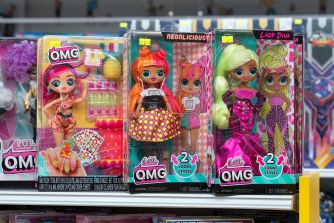
The husband-and-wife duo will return to federal court for what will be the fourth trial in their long-running lawsuit against MGA Entertainment, the toymaker behind the popular L.O.L. Surprise! O.M.G. dolls. The new trial will have a much narrower focus, asking how much punitive damages, if any, the company should pay.
The new trial stems from a September 2024 jury verdict that awarded the couple and their OMG Girlz brand $71 million after jurors concluded that MGA improperly used elements associated with the teen pop group when developing several dolls in its O.M.G. line.
Roughly $18 million represented compensatory damages, while the remaining $53.6 million was punitive damages designed to punish the company for its conduct. The punitive award did not survive judicial review.
Last year, U.S. District Judge James Selna found that the evidence did not support the $53.6 million punitive damages award. His ruling allowed T.I. and Tiny to either accept a reduced punitive award of $1 or return to court on punitive damages alone. The pair chose a new trial.
As a result, jurors in Santa Ana, California, will once again hear evidence in an intellectual property dispute involving music, fashion, branding, and toy design.
The lawsuit centers on claims that MGA copied the appearance, branding, and overall image of the OMG Girlz, a teen music group created and managed by T.I. and Tiny. The group originally featured Tiny's daughter, Zonnique Pullins, alongside Bahja Rodriguez and Breaunna Womack. During the previous trial, attorneys argued that several dolls in MGA's popular O.M.G. line closely mirrored specific OMG Girlz looks that had appeared publicly in photographs, performances, and promotional materials.
Jurors ultimately agreed, finding that MGA had misappropriated elements of the group's identity, including distinctive hairstyles, fashion choices, and branding associated with the performers. Attention has now shifted to whether MGA’s conduct supports punitive damages beyond the nearly $18 million already awarded.
At a final pretrial hearing on Monday, both sides disputed what evidence should be allowed in front of the new jury. One of the central disputes involves the significance of the term “OMG,” which appears in both the group’s name and MGA’s doll line.
MGA’s attorneys argue that the phrase is so widely used in popular culture that it cannot serve as evidence of intentional copying. According to the company’s lawyers, the acronym is effectively generic and should not be used to support a claim for punitive damages.
Attorneys for T.I. and Tiny argued that while the term itself may be common, jurors should be allowed to consider it alongside other similarities identified during the previous trial. Judge Selna appeared skeptical of giving the acronym too much weight on its own, indicating that the issue is whether it appeared alongside other recognizable elements in a way that could support allegations of intentional misconduct.
The court is also considering whether jurors should hear evidence that MGA allegedly copied the work of other artists unrelated to the OMG Girlz dispute. Attorneys for T.I. and Tiny have argued that such evidence could help establish a broader pattern of conduct and demonstrate intent.
Among the examples cited is a claim by singer-songwriter Victoria Monét, who previously alleged that MGA borrowed visual concepts from one of her music videos for promotional material tied to its Bratz dolls brand.
MGA has opposed the request, arguing that unrelated allegations would effectively force the company to defend multiple disputes in a trial that is supposed to focus solely on punitive damages. Judge Selna appeared more receptive to that position.
The first trial ended in a mistrial in early 2023 after jurors heard testimony that should not have been presented. A second trial later that year resulted in a defense verdict for MGA, but that outcome was overturned on appeal. The third trial produced the $71 million award that led to the upcoming punitive damages trial.
Throughout the litigation, MGA has consistently denied copying the OMG Girlz. The company's founder, Isaac Larian, testified during the prior trial that neither T.I., Tiny, nor the group's members played any role in the creation of the dolls. He also accused the duo of attempting to profit from MGA's success.
T.I. and Tiny have maintained the opposite view, arguing that the case is about protecting creative work from corporate appropriation. Following last year's verdict, both described the outcome as validation after years of litigation.
The new trial is set to begin on June 23.