The creative history behind one of the toy industry's most famous brands is now the subject of a federal lawsuit, with a graphic designer and former licensing executive arguing that he, not Xavier Roberts, the man long credited as the creator of Cabbage Patch Kids, is responsible for turning a batch of homemade cloth dolls into a multibillion-dollar franchise.
Roger L. Schlaifer, who once ran the now-defunct licensing firm Schlaifer Nance & Co., filed suit in Georgia federal court against Original Appalachian Artworks Inc. and Roberts, accusing them of infringing his copyright in what he calls the "Cabbage Patch Kids Large Doll."
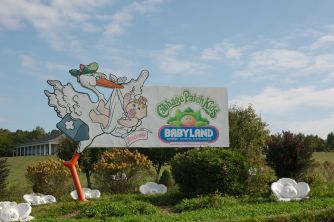
According to the complaint, the alleged infringement spans the company's website, its Babyland General Hospital tourist attraction in Cleveland, Georgia, and licensing deals with toy giants such as Hasbro and Mattel.
Schlaifer's account traces back to the brand's earliest days, when OAA sold handcrafted cloth dolls under the name "Little People," pitched by Roberts as babies available for adoption by children and folk-art collectors. Schlaifer says it was he who renamed the dolls, wrote the wordmark and logo now associated with the brand, put together a formal style guide, and reworked the dolls' appearance entirely, transforming what he describes as awkward, misshapen folk figures into the cuddly, mass-market babies and toddlers that eventually captured widespread attention.
His claim to authorship rests heavily on the terms of a March 1982 licensing arrangement between his company and OAA, which made SN&C the brand's exclusive worldwide licensor. Schlaifer points to a clause in that deal specifying that original works created by his company would remain its property, with OAA retaining no claim to them.
A few months later, SN&C struck a separate agreement with Coleco Industries granting it rights to manufacture Cabbage Patch Kids toys, and Coleco moved to copyright its plastic-headed version of the dolls, while claiming those dolls were simply exact copies of OAA's earlier cloth originals. Schlaifer disputes that characterization directly, arguing that the 1979 handmade dolls and Coleco's mass-produced plastic dolls were fundamentally different creative works, making Coleco's registration built on a false premise.
The relationship between the parties eventually soured. OAA filed a declaratory judgment action against SN&C over contract disputes, and the two sides settled in January 1988, with SN&C accepting a lump sum and back royalties in exchange for giving up its rights to the Cabbage Patch Kids property. Schlaifer signed that settlement as SN&C's president, but he argues the release only covered contractual, licensor-based copyright claims, not his personal rights as an individual author.
Because federal copyright law requires a specific written document to transfer authorship from an individual to a corporation, and no such document existed here, Schlaifer contends his personal ownership rights were never actually handed over, despite OAA's later conduct. He goes further, alleging OAA knew about this gap in the ownership chain and exploited it deliberately, benefiting from a release that his former company was never in a position to grant.
In the decades since, Schlaifer alleges OAA built an extensive commercial empire around the brand, filing roughly seventy derivative copyright registrations and signing licensing deals with major manufacturers including JAKKS Pacific, Wicked Cool Toys and Jazwares, each of which he says contained ownership warranties that were not accurate.
Looking to establish his own claim formally, Schlaifer filed seven copyright applications in January 2022 and was granted an official registration for the Large Doll design in July 2023. He says he also holds separate registrations covering other elements of the brand's mythology, including its origin story, packaging, standards manual, and characters such as the BunnyBees and Colonel Casey the stork.
Despite sending OAA formal notice of his claims in mid-2023, Schlaifer says the company has kept selling and licensing the brand without pause, which he characterizes as a continuing stream of separate infringing acts rather than a single historical dispute.
The lawsuit is asking the court to block OAA and Roberts from further use of his work, order the destruction of infringing materials, force an accounting of profits tied to the brand, and award damages, attorney fees, and costs.