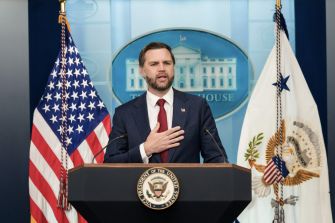
The Trump administration has blocked Microsoft, Adobe, and six other major technology companies from a federal green-card sponsorship program, halting new applications and freezing pending cases as Vice President JD Vance accuses the companies of abusing the immigration system.
Labor Secretary Keith Sonderling announced the suspensions on October 8, 2026, saying Microsoft and Adobe were under multiple active federal investigations. The restrictions also cover six major IT outsourcing companies: Cognizant, Infosys, Tata Consultancy Services, Wipro, HCL Technologies and Capgemini. The Labor Department said it would stop accepting new permanent labor certification applications and processing pending cases involving the companies.
The suspension affects the Permanent Labor Certification program, known as PERM, which employers generally must use to sponsor foreign workers for employment-based green cards. Existing H-1B visas remain valid, but employees relying on their companies to secure permanent residency could face delays in their green-card cases.
Vance singled out Microsoft, claiming the company had laid off approximately 6,000 American employees over the past year while obtaining 6,300 H-1B visas and nearly 3,000 green cards for foreign workers. He argued that those figures reflected a broader pattern of companies using immigration programs to replace U.S. workers with lower-paid foreign employees.
"Our message to Microsoft is: You're a great American company, but you've got to hire great American workers," Vance said. He accused the company of replacing employees with what he described as "foreign indentured servants," arguing that the immigration system left some workers dependent on their employers.
Vance did not provide evidence directly linking Microsoft's layoffs to its hiring of foreign workers. His figures also combine H-1B visas and green cards, which involve separate immigration processes. Officials have not publicly identified specific fraudulent applications or findings against each company.
Under the PERM program, employers seeking to sponsor foreign workers for most employment-based green cards must first obtain certification from the Labor Department. Companies generally must recruit for the position and establish that no qualified, willing, and available U.S. workers can fill it. They must also demonstrate that hiring a foreign employee will not adversely affect the wages and working conditions of similarly employed Americans.
Once the Labor Department approves a certification, an employer can generally use it to file an immigrant petition with U.S. Citizenship and Immigration Services. The worker must still satisfy additional immigration requirements before receiving permanent residency. Employees whose applications are awaiting certification cannot advance through that stage of the process while the freeze remains in effect.
Progress toward permanent residency can also affect whether certain H-1B workers qualify to extend their temporary status beyond the usual six-year limit. Employees who depend on employer-sponsored green-card applications could face additional uncertainty if the suspension continues.
The action follows a series of Trump administration efforts to tighten employment-based immigration rules, including a $100,000 payment requirement for certain new H-1B petitions and the Labor Department's Project Firewall initiative, which investigates suspected abuses of the H-1B program.
Officials also announced investigations involving nine universities, including Harvard, Yale and Stanford, over allegations of misuse of the separate J-1 exchange visitor program. Labor Department Inspector General Anthony D'Esposito said subpoenas had been issued as investigators examined possible visa violations.
The administration has not identified the specific legal authority used to suspend the eight companies or explained how long the restrictions will remain in effect. Federal regulations provide a process for barring employers from the PERM program for violations, including knowingly submitting false information or repeatedly failing to comply with certification requirements.
Under 20 C.F.R. § 656.31, formal debarment can last up to three years and requires written notice identifying the grounds for the action, its duration and opportunities for administrative review. Officials have not indicated whether that provision applies to Thursday's suspensions, how many pending applications are affected, or how the companies can challenge the restrictions.