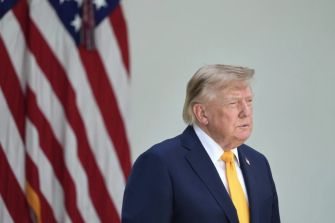
President Donald Trump pressed for the Justice Department to settle its antitrust case against Live Nation after meeting with company CEO Michael Rapino in the Oval Office on Feb. 27, a sequence newly detailed by The Wall Street Journal. The intervention came days before trial and preceded a federal settlement that allowed Live Nation to retain Ticketmaster.
According to the report, the meeting was arranged to discuss Trump’s plans for the Kennedy Center and the possibility of Live Nation becoming involved in managing the venue. During the conversation, Trump asked Rapino why his company had not settled the Justice Department case.
Rapino told Trump that Live Nation had been negotiating with the government but had not reached a deal. Trump later told a senior Justice Department official to settle the case, the Journal reported. The White House has rejected suggestions that the administration used the department to benefit Live Nation.
Live Nation had previously disclosed in a court filing that Rapino discussed the status of the lawsuit with Trump in February. The company said no substantive settlement terms were discussed during that conversation.
Rapino returned to the White House on March 5 for negotiations involving Live Nation attorneys, White House officials, and senior Justice Department officials, including Attorney General Pam Bondi. The Justice Department notified the court of a settlement on March 9, shortly after the antitrust trial began.
The agreement allowed Live Nation to keep Ticketmaster while requiring changes to parts of its concert and ticketing business. The company agreed to open its amphitheaters to competing promoters, give venues additional ticketing options, cap certain service fees, and divest exclusive booking agreements at 13 amphitheaters.
Several states joined the federal agreement, but a coalition of 34 attorneys general rejected the settlement and continued to trial. On April 15, a federal jury found Live Nation and Ticketmaster liable for illegally maintaining and abusing monopoly power in parts of the live entertainment industry. The jury also found that Ticketmaster had overcharged consumers.
The states that continued the case are seeking stronger remedies, including a court order requiring Live Nation to sell Ticketmaster. Live Nation is challenging the verdict.
The Justice Department settlement remains subject to federal court approval. U.S. District Judge Arun Subramanian must determine whether the agreement serves the public interest before entering a final judgment.
That review gives the circumstances surrounding the negotiations additional significance. The Journal reported that two senior Justice Department political appointees pushed career antitrust attorneys to remove language from an earlier settlement proposal that would have required Live Nation to divest Ticketmaster. The final federal agreement does not require a breakup.
Live Nation also expanded its lobbying and legal team as it sought a settlement. The company hired former Trump adviser Kellyanne Conway and brought in Sullivan & Cromwell to handle negotiations. The legal team included James McDonald, who previously represented Trump in his New York criminal cases and was later appointed to lead the U.S. Attorney’s Office for the Southern District of New York.
Dan Wall, Live Nation’s executive vice president of corporate and regulatory affairs, defended the company’s decision to approach senior Justice Department officials after months of unsuccessful efforts to meet with career antitrust staff. He also defended the agreement, arguing that measuring it against a forced breakup of Live Nation and Ticketmaster sets an unrealistic standard for what the government could have obtained.
The White House has denied using the Justice Department to help political allies or punish opponents. Spokesperson Lauren Bis said the administration’s focus is on enforcing the law.
The states that continued the litigation have also questioned the federal agreement. In a July court filing, they raised concerns about whether the settlement satisfies the public-interest requirement and sought additional information about how it was negotiated.
Subramanian must still decide whether to approve the Justice Department settlement. The court will separately determine the remedies following the states’ April verdict, including their request to separate Ticketmaster from Live Nation.