US Flew Diplomat Out of UK Before Police Could Question Him Over Child Abuse Images
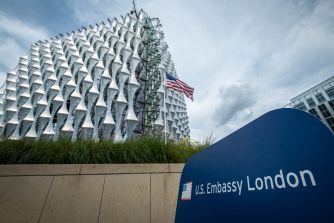
U.S. authorities flew an American diplomat out of Britain after child sexual abuse images were reportedly found during a search of his London home, removing him before British police could question him about suspected offenses in the UK.
The unnamed man was assigned to the U.S. Embassy in London and had diplomatic protection. American personnel reportedly went to his Putney home on August 25, seized electronic devices and took him to RAF Fairford in Gloucestershire before he was flown back to the United States.
The Metropolitan Police said U.S. authorities notified the force that day of an investigation into suspected offenses in London involving indecent images of children. The U.S. Embassy has confirmed allegations involving an individual assigned to the embassy and said he was reassigned to the United States. No criminal charges against the man have been publicly announced.
His departure has triggered questions in Britain over why UK authorities were not able to investigate the allegations before he was removed from the country.
The investigation reportedly began in the United States with the diplomat's brother, who was suspected of sending child abuse material to him. American investigators traced the material to London and later found additional images during the search of the diplomat's residence, according to British reports.
U.S. personnel reportedly acted under a court order obtained in America, while British police were not involved in the search before the diplomat left the country. His diplomatic status could have limited what UK authorities were able to do once the allegations surfaced.
Under the Vienna Convention on Diplomatic Relations, accredited diplomats generally cannot be arrested or prosecuted by the country where they are posted unless their government gives permission. Their homes and property also receive special protection.
The United States could have waived that immunity if British authorities wanted to pursue their own investigation. Diplomatic immunity would not stop U.S. authorities from investigating one of their own diplomats or bringing him back to the United States.
The operation has also raised questions over whether American personnel had authority to search the diplomat's residence and remove him from Britain without first involving UK law enforcement.
British lawmakers are demanding answers about how he left the country and whether authorities should seek his return. Conservative MP Ben Obese-Jecty criticized the operation and questioned whether U.S. personnel had authority to exercise law-enforcement powers on British soil.
The case has also drawn comparisons to the dispute involving Anne Sacoolas, the American who left Britain after a 2019 crash that killed 19-year-old Harry Dunn.
Sacoolas returned to the United States after diplomatic immunity was asserted on her behalf, setting off a yearslong dispute over whether she should face proceedings in Britain. She later pleaded guilty in a UK court to causing death by careless driving and participated in the proceedings remotely from the United States.
American authorities are investigating the diplomat and say they are cooperating with British officials. The U.S. Embassy said it acted quickly after learning of the allegations and informed UK law enforcement.
The Metropolitan Police remains in contact with U.S. authorities as the investigation continues. British prosecutors could seek the man's return if they eventually bring charges, but no extradition move has been announced.