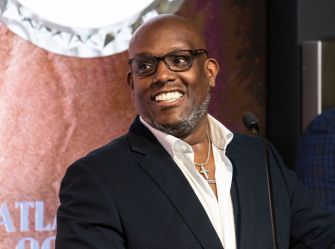
A Delaware judge has handed a major legal victory to Wayne Barrow, the Notorious B.I.G.'s longtime manager, ruling that he was rightfully named successor to Voletta Wallace's stake in her late son's music catalog, a decision that forces Biggie's widow, Faith Evans, to share proceeds from a lucrative Primary Wave licensing deal.
Delaware Chancellor Kathaleen McCormick ruled Friday that Voletta Wallace, Biggie's mother, legally designated Barrow as the successor to her 50 percent stake in the rapper's intellectual property before her death last year. The ruling means Evans, who holds the other half of the portfolio, must grant Barrow access to Voletta's 25 percent share of profits from the Primary Wave catalog deal, an agreement the Wall Street Journal has valued at roughly $100 million.
Under the terms of Voletta's will, Barrow is directed to funnel her portion of the Primary Wave proceeds to the Christopher Wallace Memorial Foundation, while the remaining money is split evenly among Biggie's two children, CJ and Ty'anna Wallace, and Evans.
Barrow's attorney, Jay Freiberg, said that the ruling amounts to a complete vindication in the case against Evans, arguing that she had no legitimate grounds to withhold the money or shut Barrow out of the deal and that the Delaware court recognized as much in granting Barrow full rights.
The dispute traces back to the months following Voletta Wallace's death in February 2025 at age 78. She had named Barrow, who managed Christopher Wallace during his career, as both the sole executor of her estate and the trustee overseeing her interest in Notorious B.I.G. LLC, the business entity that controls rights to Biggie's name and music.
Barrow sued Evans last July, accusing her of refusing to acknowledge his ownership stake or share proceeds from what he described as a transformative deal that Voletta negotiated with Primary Wave shortly before she died, one in which the company acquired a stake in Biggie's catalog along with certain rights to his name, image and likeness. Evans countersued, arguing that the LLC's governing bylaws barred Voletta from transferring her ownership stake to Barrow without Evans' consent.
McCormick rejected that argument in her Friday ruling, writing that Evans' legal position failed on multiple levels and finding that the language of the LLC agreement entitled Barrow to both a 50 percent membership interest and 25 percent distribution rights in Biggie's intellectual property holdings.
The chancellor also offered a pointed observation about the roots of the conflict, noting that the lawsuit was perhaps an inevitable outcome of Voletta and Evans' decision to become equal partners in Biggie's catalog following his 1997 killing. She invoked lyrics from Biggie's own posthumously released album Life After Death, noting that on the track "Ten Crack Commandments" he had warned listeners to keep family and business completely separated, only for his mother and widow to do precisely the opposite in the years after his death.
Despite the ruling, the broader legal battle over control of Biggie's estate and Barrow's role in it is far from settled. CJ Wallace, Biggie's son, has a separate lawsuit pending in Pennsylvania accusing Barrow of manipulating Voletta into granting him total control over her estate before she died.
Voletta's will had originally named CJ and Barrow as co-executors, but the document was amended just months before her death to make Barrow the sole administrator. That Pennsylvania case remains in its early stages, leaving unresolved questions about how much authority Barrow will ultimately retain over the late rapper's estate and legacy.