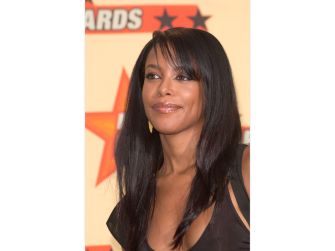
Aaliyah’s family fight over her music catalog has escalated into a $20 million settlement demand, competing claims over millions in label proceeds and a counterclaim tying the dispute to the 2001 plane crash that killed the singer.
Her cousin Jomo Hankerson sued his father, Blackground Records founder Barry Hankerson, earlier this year, accusing him of withholding money owed under a 2022 settlement that left Jomo with a 12% interest in certain label assets. He claims Barry failed to share proceeds from roughly $15 million generated by two transactions and used Blackground to reduce or conceal money owed to him.
Barry countersued in June, seeking to eliminate his son’s stake and challenging the settlement Jomo is trying to enforce. He alleges Jomo pressured him into the agreement by threatening to release unreleased Aaliyah recordings, an accusation Jomo disputes.
In correspondence between the two sides, Jomo reportedly offered to settle his claims for $20 million and sought access to financial records if Barry disputed the amount.
Both sides’ claims remain pending in Georgia court.
The Aaliyah catalog dispute traces back to May 2021, three months before much of her long-unavailable music returned to streaming. Barry and Jomo entered a written agreement giving Jomo a 20% stake in Blackground as the label prepared to relaunch its catalog through a distribution deal with EMPIRE.
Blackground controls master recordings and other rights tied to much of Aaliyah’s catalog, including “One in a Million” and her self-titled 2001 album, along with music from artists including Timbaland & Magoo, Tank, Toni Braxton and JoJo.
Jomo sued Barry in October 2021, alleging he had not received the share of profits he was promised after the catalog returned to the market.
Barry responded by accusing his son of obtaining the 20% stake through duress. He alleged that while he was recovering from a stroke, Jomo threatened to leak unreleased Aaliyah masters and jeopardize the pending EMPIRE deal unless Barry gave him an ownership interest.
The two resolved that litigation in late 2022. Barry agreed to pay Jomo $1.3 million, while Jomo’s interest was reduced from 20% to 12%.
The new litigation puts that settlement back at the center of the dispute. Jomo wants the agreement enforced and an accounting of money he says should have flowed to his 12% interest. Barry argues the settlement itself was improperly obtained and should be set aside.
The cases concern Jomo’s claimed interest in Blackground and proceeds from assets covered by the agreements. They do not determine ownership of Aaliyah’s estate, which is separately controlled by her mother, Diane Haughton.
Barry’s counterclaims also accuse Jomo of mishandling travel arrangements for Aaliyah’s 2001 Bahamas video shoot. He alleges his son had been paid to coordinate her travel and claims the fatal flight “may have been avoided” if Jomo had carried out that responsibility.
Aaliyah, 22, and eight others died when their chartered Cessna crashed shortly after takeoff from Marsh Harbour on Aug. 25, 2001. The allegation against Jomo is Barry’s claim in the family litigation. The official crash investigation found the aircraft was substantially overweight and improperly balanced, while the pilot was not authorized to operate the charter flight.
Diane Haughton is not a party to the father-son dispute, though she and Blackground are involved in a separate fight over a $243,000 royalty payment.
Blackground paid Haughton the money in 2023 and later sued to recover it, arguing that a 2003 wrongful-death settlement involving Virgin Records barred additional claims connected to Aaliyah’s death. The initial case was dropped after Haughton was not served, and Blackground refiled the claims in May.
The family disputes have continued even as Aaliyah’s catalog has generated new business. Blackground returned her albums to streaming in 2021, released posthumous recordings, and later sold publishing assets to Legacy Publishing as part of a catalog containing hundreds of songs.
Barry continues operating Blackground 2.0, while Jomo’s lawsuit and his father’s counterclaims remain unresolved. The agreements that helped clear the way for Aaliyah’s catalog to return five years ago are now at the center of another fight over who is entitled to the money it generates.