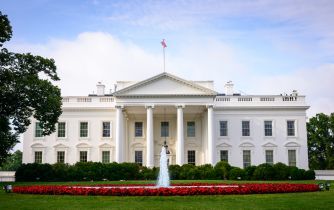
A federal appeals court has ordered the Trump administration to halt most aboveground construction of President Donald Trump’s planned White House ballroom, ruling that a project of that scale cannot proceed without approval from Congress.
The 2-1 decision from the U.S. Court of Appeals for the District of Columbia Circuit upheld a preliminary injunction against the $400 million project. Judges Patricia Millett and Bradley Garcia formed the majority, while Judge Neomi Rao dissented.
The court delayed the effect of its ruling for 14 days, giving the administration time to seek Supreme Court review.
Underground work on bunkers, military and medical facilities may continue. The injunction also permits aboveground construction needed to protect those facilities, secure the site or preserve the White House.
The approximately 90,000-square-foot ballroom is being built on the site of the former East Wing, which the administration demolished in 2025. Trump has said the venue would hold up to 999 people and provide more space for state dinners and other formal events.
The National Trust for Historic Preservation sued in December, arguing that the administration moved forward without obtaining approvals required for construction on federal land and changes to a historic property.
The National Capital Planning Commission approved the ballroom plans in April. U.S. District Judge Richard Leon later blocked aboveground construction but revised his order to allow underground security work and construction needed to protect those facilities.
Federal law requires express congressional approval before a building or structure is erected on federal parkland or public grounds in Washington. The Constitution also gives Congress authority over property owned by the federal government, including the White House and its surrounding grounds.
The administration argued that laws covering White House maintenance, repairs and improvements gave the executive branch authority to proceed. The appeals court found that those provisions did not authorize demolition of the East Wing and construction of an entirely new building.
Design approval from the planning commission and private financing also did not replace congressional authorization, according to the ruling. Trump has said corporations, wealthy donors and the president himself are covering the project’s cost.
Government attorneys maintained that the ballroom was part of a broader security project intended to protect the president, White House staff and visitors. The majority found that the revised injunction addressed those concerns by allowing underground facilities and work needed to protect them.
Rao argued in dissent that the National Trust lacked standing because its claimed injury rested largely on one member’s concerns about the project. The majority found that the member’s regular visits and professional interest in Washington architecture were enough to establish a concrete injury.
Trump has said he will ask the Supreme Court to review the decision before the appeals court’s 14-day hold expires.