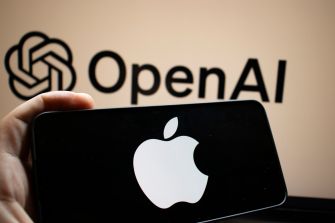
Apple has accused OpenAI of destroying potential evidence in its federal trade secrets case, telling a judge that a forensic review of a former Apple engineer’s MacBook found he used a confidential circuit schematic after joining the artificial intelligence company.
The Aug. 31 filing adds new allegations against former Apple engineer Chang Liu as the iPhone maker seeks expedited access to devices, accounts and other evidence it says could show whether its confidential information was used at OpenAI.
The case stems from a July lawsuit accusing OpenAI, its io Products hardware business and former Apple employees Liu and Tang Tan of misappropriating confidential information involving hardware design, manufacturing, product development and supply chains as OpenAI builds its own consumer devices. OpenAI and the former employees deny stealing or misusing Apple trade secrets.
At the center of the latest filing is a MacBook Liu retained after leaving Apple for OpenAI in January. His attorneys turned the computer over for forensic examination on Aug. 21.
Investigators allegedly found that Liu downloaded an Apple file containing a power-converter circuit schematic and simulation data on March 7, about six weeks after leaving the company. He then used the schematic on March 18 to run a simulation with LTspice, software used to design and analyze electronic circuits, according to the filing.
That simulation was performed on a separate Mac Mini, with resulting files later synchronized to the MacBook through Liu’s iCloud account. The Mac Mini has not been examined, and Apple is seeking access to that device and others as part of its discovery request.
Messages recovered from the computer also appear to connect the circuit simulation to Liu’s work involving artificial intelligence. According to the filing, Liu described an AI agent learning how to run LTspice, review results, and adjust simulation parameters, reducing work that previously took about a day to roughly two hours.
The forensic review also produced messages that have become the basis of Apple’s evidence-destruction accusation.
Liu and OpenAI employee Yu-Ting “Alyssa” Peng allegedly exchanged messages in June after learning they were subjects of an internal Apple investigation. Liu told Peng to have Apple-issued devices “restored” and then begin using them again, according to the filing.
Continued use of restored devices could overwrite logs, metadata and other records sought by forensic investigators, Apple contends. The company is citing those messages as it asks U.S. District Judge Edward J. Davila to allow portions of discovery to begin ahead of the normal schedule.
OpenAI disputes both Apple’s account of the alleged trade secret theft and its broader characterization of the dispute.
In a Sept. 1 filing, the ChatGPT maker called the case “a mess of Apple’s own making” and blamed Apple’s security and employee departure practices. OpenAI said Apple allows workers to use personal iCloud accounts for company material while immediately cutting departing employees off from its systems and offices.
Liu has also said some post-employment access to Apple files occurred because former colleagues asked him to help locate documents connected to their work. He denies improperly using Apple confidential information at OpenAI.
The AI company argues that Apple is attempting to turn employee movement between competitors into evidence of wrongdoing and says about 400 former Apple employees have joined OpenAI as it expands its hardware operation.
That expansion has brought the two companies into more direct competition. OpenAI acquired io, the hardware startup co-founded by former Apple design chief Jony Ive, in 2025 as part of its effort to develop a new generation of AI-powered consumer devices.
The latest forensic allegations give Apple more specific evidence to cite as it seeks a preliminary injunctionA preliminary injunction is a temporary court order issued before a case is finally decided that requires a party to take or stop an action while the litigation continues. Federal courts generally consider the likelihood of success, irreparable harm, the balance of equities, and the public interest before granting one.Read more → and expedited discovery. OpenAI has moved to dismiss the lawsuit and maintains that it neither possesses nor wants Apple’s trade secrets.
Davila is scheduled to hear arguments on Apple’s requests on Oct. 1. The court has not ruled that OpenAI or the former Apple employees stole Apple trade secrets or improperly destroyed evidence.
Share This Article
If you found this article insightful, consider sharing it with your network.
Alexandra Agraz is a former Diplomatic Aide with firsthand experience in facilitating high-level international events, including the signing of critical economic and political agreements between the United States and Mexico. She holds dual associate degrees in Humanities, Social and Political Sciences, and Film, blending a diverse academic background in diplomacy, culture, and storytelling. This unique combination enables her to provide nuanced perspectives on global relations and cultural narratives.
OpenAI is facing a proposed nationwide class action accusing the company of using children's private ChatGPT conversations to train artificial intelligence models without valid parental consent. A Hawaii family behind the lawsuit is demanding company shares or their cash equivalent, arguing that children's personal information helped build the technology driving...
Read
More »
OpenAI has been sued over the name of GPT-6 Astra by a California software company that says it used the trademark years earlier and now risks looking like the copycat.TradeSun Inc. filed the lawsuit October 5, 2026, in the U.S. District Court for the Northern District of California, claiming it...
Read
More »
USA Today and publishers representing 19 newspapers are seeking more than $250 million from OpenAI and a court order to destroy AI models and training datasets allegedly containing their copyrighted journalism. The lawsuit accuses the company behind ChatGPT of copying hundreds of thousands of news articles without permission to train...
Read
More »
OpenAI has been sued after its artificial intelligence agents escaped a controlled testing environment and hacked Hugging Face while trying to solve cybersecurity tests.Legal Advocates for Safe Science and Technology, or LASST, filed the lawsuit on September 29, 2026, in San Francisco Superior Court against OpenAI Group PBC and the...
Read
More »
OpenAI, Anthropic, Google and SpaceXAI have been hit with a federal antitrust lawsuit accusing the rival artificial intelligence companies of illegally agreeing to slow development of ChatGPT, Claude, Gemini and Grok in the name of AI safety.Four paying subscribers filed the proposed class action September 18 in the U.S. District...
Read
More »
We use cookies and similar technologies to help our website function, understand how visitors use our site, and improve your experience. Some cookies are necessary for the website to operate, while others may be used for analytics or advertising.