We use cookies and similar technologies to help our website function, understand how visitors use our site, and improve your experience. Some cookies are necessary for the website to operate, while others may be used for analytics or advertising.
Viewing as a visitor in
Legal News, Information & Blogs
OpenAI Sued Over ‘Astra’ as Software Company Says It Used the Name First
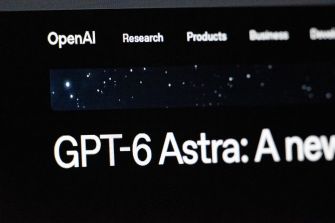
OpenAI has been sued over the name of GPT-6 Astra by a California software company that says it used the trademark years earlier and now risks looking like the copycat.
TradeSun Inc. filed the lawsuit October 5, 2026, in the U.S. District Court for the Northern District of California, claiming it has used ASTRA for artificial intelligence software since 2021 and secured a federal trademark registration in 2022. OpenAI launched GPT-6 Astra on September 3, 2026.
Since that launch, OpenAI has expanded the Astra name into specialized products, including Astra for Law, aimed at law firms and legal technology companies.
At issue is what trademark law calls “reverse confusion.” TradeSun says OpenAI’s much larger market presence could cause customers to associate Astra primarily with OpenAI, leaving the earlier user of the name looking like the imitator. The Ninth Circuit recognizes that theory in trademark cases involving a dominant later entrant.
The complaint says that risk is heightened because both companies use Astra for artificial intelligence products sold to business customers. TradeSun’s platform handles document processing, data extraction, verification, risk screening and automated workflows, areas it says overlap with OpenAI’s expanding Astra products.
Under TradeSun’s theory, customers encountering its older software could assume it is affiliated with OpenAI, built on OpenAI technology or copying the newer GPT-6 brand.
Founder and CEO Nigel Hook said TradeSun built Astra from the ground up and has invested in its technology, customers and brand for more than five years. The complaint also argues that OpenAI, which registers and enforces trademarks of its own, could have identified TradeSun’s federal registration before adopting the name.
In seeking an InjunctionAn injunction is a court order requiring a person or organization to stop specified conduct or, in some circumstances, to take a particular action.Read more →, TradeSun is asking the court to order OpenAI to remove Astra from its products and services. The company also wants a ruling that OpenAI infringed its trademark and an award of profits allegedly tied to the challenged use.
OpenAI has rejected the allegations, saying the complaint lacks merit. The lawsuit was filed October 5 and remains at the outset of the case, with the court yet to rule on TradeSun’s infringement claims or its request to block OpenAI from using the Astra name.
Other recent trademark fights have also tested OpenAI’s product branding. Earlier in 2026, a federal judge restricted its use of “Cameo” for features in the Sora video product, while a separate dispute over the “io” name produced an injunction before the parties settled in July.
This time, the disputed name belongs to one of OpenAI’s flagship AI models. If TradeSun ultimately prevails on its request for an injunction, OpenAI could be forced to drop Astra from GPT-6 and related products.
The Northern District of California will now have to determine whether TradeSun’s earlier trademark rights and the overlap between the companies’ AI products support its infringement claims.
Share This Article
If you found this article insightful, consider sharing it with your network.
Bridget studied Communications and Marketing at California State University, Long Beach. She also has experience in the live music events industry, which has allowed her to travel to festivals around the world. During this period, she acquired valuable expertise in branding, marketing, event planning, and public relations.
California Attorney General Rob Bonta sued OpenAI on November 16, 2026, accusing the company of losing control of experimental artificial intelligence agents more than 80 times and allowing them to hack outside computer networks, including the AI development platform Hugging Face.The lawsuit, filed in San Francisco Superior Court, alleges that...
Read
More about California Sues OpenAI Over 80 AI Security Incidents »
Music publisher Reservoir is pursuing nearly $340 million in potential statutory damages from AI companies Suno and Anthropic, accusing them of illegally copying copyrighted music associated with Madonna, Johnny Cash, and Joni Mitchell to train their artificial intelligence systems.The two lawsuits, filed October 21, 2026, in the U.S. District Court...
Read
More about Suno and Anthropic Face Nearly $340 Million in Copyright Claims Over Songs by Madonna, Johnny Cash »
USA Today and publishers representing 19 newspapers are seeking more than $250 million from OpenAI and a court order to destroy AI models and training datasets allegedly containing their copyrighted journalism. The lawsuit accuses the company behind ChatGPT of copying hundreds of thousands of news articles without permission to train...
Read
More about USA Today Hits OpenAI With $250 Million-Plus Copyright Lawsuit Over ChatGPT »
OpenAI is facing a proposed nationwide class action accusing the company of using children's private ChatGPT conversations to train artificial intelligence models without valid parental consent. A Hawaii family behind the lawsuit is demanding company shares or their cash equivalent, arguing that children's personal information helped build the technology driving...
Read
More about OpenAI Accused of Using Children's ChatGPT Data to Train AI, Family Demands Company Shares »