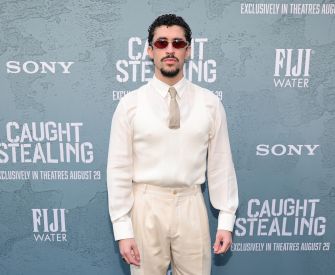
Bad Bunny and more than 150 other artists have won a major ruling in a sprawling copyright lawsuit over the dembow rhythm at the heart of reggaeton, after a federal judge reversed an earlier decision that had sent a central part of the case toward trial.
U.S. District Judge André Birotte Jr. ruled Tuesday that producers Steely & Clevie could not pursue their broad copyright theory because they failed to identify a single copyrighted work containing the complete combination of musical elements they sought to protect. The litigation covers nearly 2,000 songs and has named artists including Karol G, Daddy Yankee, J Balvin, Drake, Pitbull, Luis Fonsi and Justin Bieber.
The Sept. 1 decision reverses a July ruling in which Birotte found that disputes between music experts should be resolved by a jury, including whether the claimed arrangement was sufficiently original to receive copyright protection. Bad Bunny and his label, Rimas Entertainment, asked the judge to reconsider, arguing that the plaintiffs were trying to build the disputed arrangement from elements found across different works.
Birotte ultimately agreed. The judge found that the complete selection and arrangement Steely & Clevie sought to enforce had not been clearly identified within any one copyrighted work they owned.
That distinction is critical under copyright law. A plaintiff claiming infringement must first identify the copyrighted work and the protected expression contained within it before a court can determine whether another work unlawfully copied it. Birotte concluded that the plaintiffs could not instead combine elements taken from multiple existing works and treat the resulting arrangement as the copyrighted work at the center of the lawsuit.
The defense had attacked that approach during an August hearing, with Bad Bunny attorney Kenneth D. Freundlich describing it as a “Frankenstein” copyright assembled from separate songs. Birotte found that allowing the asserted work to shift during the litigation would leave a jury to determine what the claimed copyright actually covered before deciding whether it had been infringed.
The lawsuit was filed in 2021 by Cleveland “Clevie” Browne and the heirs of the late Wycliffe “Steely” Johnson. They allege that Steely & Clevie’s 1989 track “Fish Market” contains musical elements that became the foundation of dembow, the distinctive percussion pattern closely associated with reggaeton.
The new ruling does not establish that the dembow rhythm itself is incapable of copyright protection. Birotte specifically declined to decide whether the musical elements claimed by Steely & Clevie, individually or together, are sufficiently original. Instead, he found that the broader claim could not proceed because the plaintiffs had not tied the selection and arrangement they sought to protect to a single copyrighted work.
That finding removes a major portion of the case from trial but does not end the litigation. Claims alleging that some songs directly sampled Steely & Clevie’s copyrighted sound recordings remain pending and are narrower than the compositional theory rejected Tuesday.
Freundlich said in a statement to Billboard that the decision confirmed the defense position that copyright protects music an artist actually created rather than a combination assembled during litigation. An attorney for Steely & Clevie did not immediately respond to the outlet’s request for comment.
Birotte ordered the parties to meet within 30 days to discuss a schedule for resolving the remaining claims. They must submit a joint proposal, or separate proposals if they cannot agree, within 15 days after that meeting.