A new bipartisan bill would pressure states to sharply restrict police use of Flock cameras and other automated license plate readers by putting a portion of their federal highway funding at risk.
Reps. Raja Krishnamoorthi, D-Ill., and Michael Cloud, R-Texas, introduced the No FLOCK Act on Tuesday amid growing scrutiny of technology that allows police to track vehicles across jurisdictions. States would have two fiscal years to limit the cameras to five approved uses or face the loss of 10% of certain federal transportation funding.
Police could use automated license plate readers to enforce tolls, identify stolen vehicles, locate missing or endangered people, identify vehicles registered to people with felony warrants, and investigate vehicles involved in felony offenses. Uses including parking and speeding enforcement, traffic studies, and investigations of lower-level crimes would fall outside those categories.
The proposal would use federal transportation money to push states to adopt the restrictions instead of imposing one nationwide rule directly on local police departments. Congress has previously tied highway funding to state policies, including the national minimum drinking age.
After the two-year implementation period, the transportation secretary would withhold 10% of the federal surface transportation funding allocated to states without the required restrictions. If the legislation becomes law this year, the financial consequences could begin in October 2028.
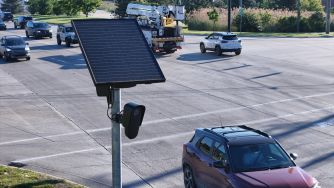
The legislation puts Flock Safety at the center of a growing national fight over how widely police should be able to track drivers through automated cameras. The Atlanta-based company operates about 120,000 license plate readers across every state except Alaska, according to Reuters.
Flock cameras capture passing vehicles and record details including license plates, time and location. Officers can search those records to identify vehicles connected to crimes, locate stolen cars or find missing people. The ability to share information across jurisdictions also gives police access to vehicle sightings collected beyond their own communities.
Krishnamoorthi said the legislation follows an investigation that exposed gaps in oversight and reports of officers using license plate reader systems for personal reasons.
“Automated license plate readers can be powerful tools for law enforcement to investigate serious crimes and protect our communities, but they must not become tools for officers to stalk ex-partners or spy on people for personal reasons,” Krishnamoorthi said.
An August Washington Post investigation identified at least 69 police officials accused, charged or convicted of misusing Flock or other license plate reader systems. Reported cases included officers allegedly searching for vehicles connected to wives, girlfriends, former romantic partners and acquaintances.
Flock has since announced stronger safeguards, including a requirement that officers attach criminal case numbers to searches and automated reviews designed to flag unusual activity. The company also shortened its default data retention period from 30 days to seven days and gave departments additional control over data sharing.
The company has defended automated license plate readers as an effective public safety tool. In response to Florida's recent restrictions, a Flock spokesperson said the company supports privacy, transparency and accountability measures that preserve law enforcement access to the technology.
Cloud described the new bill as an effort to curb government surveillance while maintaining specific public safety uses.
“Taxpayers shouldn't be forced to fund the shredding of their own civil liberties or the growth of a surveillance state,” Cloud said. “This bill is a first step toward reining in unchecked surveillance.”
The No FLOCK Act would leave the cameras available for the five approved purposes. Broader sharing of license plate data with other government agencies, including immigration authorities, falls outside the restrictions proposed in the measure.
Pressure on the technology has already spread to the states. Florida moved this month to prevent local police from placing license plate readers on state highways, while Texas Gov. Greg Abbott ordered state agencies in August to pause funding for Flock cameras.
Congress is also considering a separate proposal from Reps. Thomas Massie, R-Ky., and Eric Burlison, R-Mo., that would prohibit federal money from being used to purchase, install, operate, or maintain automated license plate readers. That measure, called the Flock-Off Act, was introduced earlier this month.
The No FLOCK Act takes a different approach by putting state highway money on the line. States could keep using the technology for the bill's approved purposes, but those that allow broader uses could risk losing a portion of their federal transportation funding. The legislation would need to pass Congress and be signed into law before the restrictions take effect.