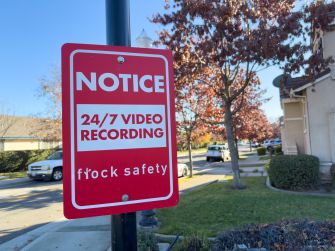
A Colorado woman cleared of stealing a $25 package is suing Flock Safety after police used the company's license plate cameras to track her movements over nearly a month and issued a criminal summons despite evidence she says established her innocence.
Chrisanna Elser filed the proposed class action on October 5, 2026, in the U.S. District Court for the District of Colorado against Flock Group, the towns of Columbine Valley and Bow Mar, Police Sgt. Jamie Milliman and Police Chief Bret Cottrell. The lawsuit alleges unconstitutional surveillance and seeks damages and restrictions on how law enforcement agencies access vehicle-location records.
The case stems from a September 27, 2025, encounter at Elser's Denver home, where Milliman accused her of stealing a package from a porch in nearby Bow Mar. According to the complaint, he had searched Flock's database and reviewed approximately 20 trips her green Rivian had made through the town over the previous month.
The cameras recorded her vehicle passing through Bow Mar around the time of the theft, which Milliman treated as evidence connecting her to the missing package. But footage of the theft itself showed a woman fleeing on foot whose appearance, Elser alleges, differed substantially from her own.
During the encounter, recorded on police body camera and doorbell footage, Milliman told Elser that cameras monitored vehicles entering and leaving Bow Mar. He insisted he had evidence showing her taking the package and said he would not have come to her home unless he was "100% sure."
Elser denied stealing the package and asked to see the footage. She also offered information from her vehicle's onboard cameras and phone-location records, but Milliman declined to review it and issued the summons.
According to the lawsuit, records later established that Elser had been more than a quarter-mile from the theft location, getting fitted for a gown. She spent the following weeks attempting to clear her name before Cottrell voided the summons on October 15, 2025.
Elser alleges the accusation caused significant emotional distress, disrupted her professional life and nearly resulted in her being placed on administrative leave by her employer in the financial industry.
Her federal claims challenge the officer's decision to search weeks of historical location data and the evidence used to initiate the theft prosecution. The complaint alleges that Milliman lacked probable cause to issue the summons and disregarded information that pointed away from Elser as the suspect.
Under the Fourth Amendment, people are protected against unreasonable government searches and seizures. Elser argues that police violated that protection by using Flock's automated license plate reader network to reconstruct her movements without a warrant. The cameras capture passing vehicles, license plates, locations and timestamps, allowing officers to retrieve earlier sightings through a searchable database.
The lawsuit also alleges that Flock played an active role in making the surveillance possible. According to the complaint, the company provided access to its network, trained Milliman and Cottrell on the technology and allowed officers to search accumulated vehicle records without adequate safeguards.
Elser seeks to hold Flock responsible under federal civil rights law, arguing that the company worked jointly with local authorities in operating the tracking system. She also brings Colorado privacy and negligence claims against the company, while her malicious prosecution claim targets the municipal and police defendants.
Her proposed class action seeks to represent Colorado vehicle owners and lessees whose license plates and location information Flock has collected and retained. Along with financial compensation, Elser is asking the court to impose restrictions on the collection, retention, sharing and searching of those records, including warrant requirements, documented case numbers, supervisory approval and audits of police searches.
Flock disputes responsibility for the mistaken accusation, maintaining that its system accurately recorded Elser's vehicle and location. The company says its cameras provide investigative leads and that law enforcement officers are responsible for evaluating the information alongside other evidence. Flock has said it intends to defend itself against the allegations.
The Colorado lawsuit comes days after an October 1, 2026, ruling in Oklahoma, where a federal judge found that an officer violated a driver's Fourth Amendment rights by searching approximately a month of historical vehicle-location records through Flock and other license plate reader systems without a warrant. The decision arose in a separate criminal prosecution and addressed a similar constitutional question.
Elser's lawsuit remains in its early stages in federal court. A judge has yet to rule on the constitutional claims or decide whether the case can proceed as a class action.