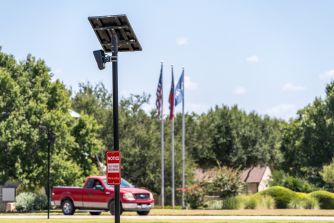
Tempe has become the first city in Arizona to outlaw police-operated license plate readers, shutting the door on Flock-style surveillance systems even as the new law leaves officers a way to obtain vehicle-tracking data collected elsewhere.
The City Council approved the ban in a 6-1 vote on October 15, 2026, adopting Ordinance O2026.46 after months of debate over government surveillance and data sharing. The restrictions follow Tempe's shutdown of 33 Flock Safety cameras in August and prevent city agencies from replacing them with another automated license plate reader system.
Under the ordinance, municipal agencies are prohibited from purchasing, operating or contracting for the technology. Existing license plate data must also be destroyed, subject to legal requirements to preserve certain records, including evidence tied to criminal investigations.
Police can still obtain information collected by outside agencies through specified legal procedures, including warrants, subpoenas and court orders. Officers assigned to multijurisdictional task forces may also use data independently gathered by participating agencies, provided Tempe police did not request the underlying database search.
Even some supporters of the ban objected to its final wording. At the October 15 meeting, resident Eric Fowler argued that officers could continue benefiting from outside surveillance networks despite losing access to Tempe's own cameras. The proposal underwent six drafts before the council's vote, with revisions narrowing access to external databases while preserving certain investigative exceptions.
Councilmember Bobby Nichols, who spearheaded the ordinance, sought lasting safeguards against widespread tracking of residents and visitors. Vice Mayor Arlene Chin cast the only opposing vote, arguing that the prohibition was too sweeping and could deprive investigators of technology used to solve crimes.
Automated license plate readers, commonly called ALPRs, photograph passing vehicles and record identifying details such as plate numbers, vehicle descriptions, locations and timestamps. Police can search those records to locate stolen vehicles, identify suspects and reconstruct a vehicle's movements across multiple locations.
Tempe previously used Flock cameras through its police department's Real-Time Operations Center. The August shutdown ended that program, while the October vote placed restrictions on future municipal use into city law.
The measure also leaves some license plate readers operating within Tempe. Arizona State University maintains a separate network of 20 Flock cameras on its campus, and privately operated systems remain outside the city's general prohibition. Municipal employees seeking information from those networks must comply with the new limits, while certain non-law-enforcement uses, including parking management, remain permitted.
Tempe's action comes as Arizona Attorney General Kris Mayes investigates the statewide use of automated license plate readers. Mayes announced the review on August 27, 2026, amid concerns about how law enforcement agencies collect, retain, and share vehicle-location data, including potential misuse and constitutional privacy violations.
The investigation raises questions about the Fourth Amendment, which protects against unreasonable government searches and seizures. Automated cameras capture information visible on public roads, but compiling extensive records of a person's movements can raise separate constitutional concerns.
In Carpenter v. United States, the U.S. Supreme Court ruled in 2018 that police generally need a warrant to obtain certain historical cellphone location records from wireless carriers. The decision addressed cellphone tracking, leaving the constitutional treatment of automated license plate databases to separate legal analysis.
Mayes' office plans to present its findings to Arizona lawmakers and the governor, potentially informing statewide legislation governing police surveillance technology and access to vehicle-tracking information.
Tempe's ordinance is expected to take effect in mid-November, as the attorney general's investigation continues and other Arizona communities reconsider their own Flock camera program