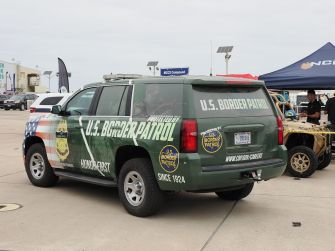
Two U.S. Border Patrol vehicles parked outside Leon County's busiest early voting site in Tallahassee, Florida, on the first day of voting, prompting the county's elections supervisor to file a formal FBI complaint over possible voter intimidation just two weeks before the November 3 midterm elections.
Leon County Supervisor of Elections Mark Earley said the vehicles arrived outside the Northeast Branch Library around 10:15 a.m. on October 19, 2026, and remained for approximately 10 minutes before leaving. The incident came after Earley had received assurances from federal and state law enforcement agencies that immigration agents would stay away from polling places during the election.
Earley confirmed the FBI complaint on October 21, saying the bureau was taking the matter seriously. His office received no complaints from voters about the incident, although he expressed concern about the effect of federal immigration enforcement vehicles appearing outside an active voting location.
"I will do everything in my power to ensure that our voters can vote in a fair election free from intimidation or implied threats," Earley said.
The stop occurred two months after Earley publicly assured residents that federal immigration agents would be absent from polling locations. In an August interview with the Tallahassee Democrat, he said the Department of Homeland Security, FBI, and Florida Department of Law Enforcement had repeatedly told him that officers would stay away from voting sites.
"I've been reassured by DHS themselves that they understand that federal laws explicitly prohibit that kind of a presence at the polls, as do state laws," Earley said at the time.
His earlier assurances followed inquiries from Leon County residents worried about encountering immigration officers while voting. Earley said his office had received roughly a dozen calls expressing those fears, including one from a Latina voter who was concerned about being detained at a polling location.
Federal law makes it a crime to intimidate, threaten or coerce someone for the purpose of interfering with their right to vote in a federal election. Under 18 U.S.C. § 594, violations can carry fines and imprisonment of up to one year. Prosecutors pursuing charges must establish the prohibited conduct and the required intent, making the circumstances of the Border Patrol stop central to any potential criminal case.
The incident follows a September 10 federal lawsuit filed by the city of Denver and several voting rights organizations seeking to block the Trump administration from deploying armed immigration officers to polling places. The lawsuit challenges a federal policy allowing Immigration and Customs Enforcement agents to enter voting sites to serve warrants or conduct other enforcement operations.
The plaintiffs argue that the policy violates a longstanding federal prohibition on sending armed personnel to election locations, except under narrowly defined circumstances. Homeland Security officials have maintained that immigration officers may carry out authorized enforcement duties, while the lawsuit seeks restrictions on those operations at polling places.
On October 7, the plaintiffs expanded their challenge to include Hennepin County, Minnesota, and added a claim under the Voting Rights Act alleging that the federal policy could intimidate or discourage eligible voters. The case remains pending in the U.S. District Court for the District of Columbia.
The dispute centers partly on 18 U.S.C. § 592, which restricts federal officials from sending armed personnel to places where elections are held. That statute is separate from the voter intimidation provision and carries different legal requirements. Its application to immigration enforcement officers is among the issues raised in the litigation.
In Tallahassee, the Border Patrol vehicles' purpose remains unconfirmed, including whether agents conducted any enforcement activity or interacted with people at the library. Earley said he was coordinating with local, state, and federal law enforcement officials following the incident.
Leon County's early voting period continues through November 1 at 10 designated locations. The FBI has not publicly announced whether it has opened a formal investigation into the October 19 stop.