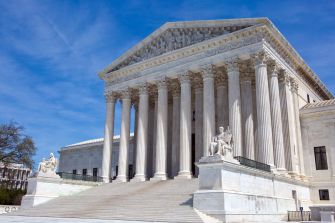
The Supreme Court on Friday revived the Trump administration’s expanded voter citizenship-check system, allowing state and local election officials to again use Social Security numbers and other federal records to verify people on voter rolls weeks before the November midterm elections.
The justices granted the administration’s emergency request to block a lower-court ruling that had shut down the modified Systematic Alien Verification for Entitlements program, known as SAVE. The system can search federal citizenship records individually or in bulk, giving election officials a tool to identify registrations that may require further review.
President Donald Trump directed the Department of Homeland Security to expand SAVE as part of a March 2025 executive order focused on citizenship verification in elections. The program had previously been used primarily to verify immigration and citizenship status for government benefits and other services.
The overhaul gave election officials access to a much broader set of federal records. Agencies can search using names, dates of birth and Social Security numbers, submit records in bulk and compare voter information with Social Security Administration data. Several Republican-led states have since compared their voter rolls against SAVE, and some voters flagged as potential noncitizens have had their registrations canceled.
Voting-rights and privacy groups challenged the changes, arguing that incomplete or outdated federal records can incorrectly flag eligible voters, particularly naturalized citizens. The administration has defended SAVE as a verification tool that helps states identify records requiring closer examination.
The League of Women Voters, several state affiliates and the Electronic Privacy Information Center sued DHS and the Social Security Administration over the expansion. They accused the agencies of improperly combining sensitive federal records and placing eligible voters at risk of losing their registrations.
U.S. District Judge Sparkle Sooknanan sided with the groups in June, finding that the modified system violated the Social Security Act, the Privacy Act and the Administrative Procedure Act. She set aside the expansion and the federal notices used to establish it.
The Trump administration appealed and asked the D.C. Circuit to suspend Sooknanan’s ruling while the case moved forward. A divided panel rejected that request on September 4, with Circuit Judge Gregory Katsas dissenting.
Friday’s Supreme Court order reverses that position for now.
The majority said federal immigration law likely authorizes DHS to request and receive citizenship information from agencies including the Social Security Administration and to provide verification when state or local officials seek a person’s citizenship status. The justices found the administration likely to succeed on that part of its appeal, restoring access to SAVE while a separate federal election law still governs how states can use the information this close to November.
Under the National Voter Registration Act, states generally must complete systematic programs aimed at removing ineligible voters at least 90 days before a federal election. With that window already closed for the November midterms, states face limits on broad voter-roll removal efforts even with the expanded database back in operation.
Individual eligibility reviews can continue during the 90-day period. Election officials may use SAVE to examine particular registrations and seek additional information when federal records raise questions about citizenship, with state and local authorities deciding what action to take under applicable election law.
The challengers say errors in the underlying records can still put eligible voters under scrutiny. Their Supreme Court filings cited people flagged as possible noncitizens who were later confirmed to be U.S. citizens, including voters whose citizenship information had not been accurately reflected in federal records. The administration maintains that SAVE gives states a faster way to verify citizenship and leaves registration decisions to election officials.
Justice Ketanji Brown Jackson dissented, joined by Justices Sonia Sotomayor and Elena Kagan. Jackson argued that the Court was allowing the system to resume while substantial questions under federal privacy laws remain unresolved and pointed to the potential burden on eligible voters whose records are inaccurate or incomplete.
The case now returns to the D.C. Circuit, where the administration is challenging Sooknanan’s June ruling. The Supreme Court’s stay keeps the expanded SAVE system operating during that appeal, leaving the broader fight over how federal citizenship records can be used in voter verification for another stage of the case.