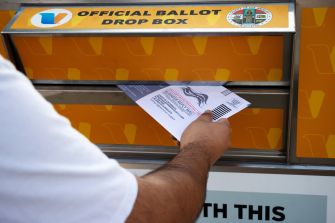
Federal prosecutors charged 28 green card holders with voting-related crimes in California on October 19, 2026, arresting 11 as the Justice Department fights to block ballots tied to more than 20,000 voters it suspects are noncitizens ahead of the November 3 midterm elections.
The arrests escalate a federal lawsuit filed four days earlier seeking to force California to set aside ballots from voters flagged by immigration investigators until their citizenship can be verified. State election officials rejected the demand, challenging the government's evidence and its authority to intervene.
The charges stem from Operation Protect the Vote, a statewide initiative involving all four U.S. attorney's offices in California. Prosecutors allege that 21 defendants unlawfully cast ballots, while several made false citizenship claims when registering or concealed their voting histories during naturalization proceedings.
Among those charged is Omar Alexander Muñoz, 72, a Belizean national living in Commerce, Los Angeles County. Authorities allege he falsely claimed citizenship when registering in September 2019, then voted in the 2020, 2022 and 2024 elections. Investigators also accuse him of making false statements about his citizenship claim during the naturalization process.
Federal agents arrested Muñoz on Monday as authorities carried out operations across California. Charges against the defendants include unlawful voting, fraudulent registration and false statements in immigration proceedings. Some offenses carry maximum prison sentences of five years, while certain unlawful voting charges carry up to one year.
Green card holders can live and work permanently in the United States, but voting in federal elections requires U.S. citizenship, subject to narrow statutory exceptions. False citizenship claims can also jeopardize an individual's immigration status and eligibility for naturalization. All 28 defendants are presumed innocent unless proven guilty.
The prosecutions have become a central argument in the Justice Department's lawsuit against California. Acting Deputy Attorney General Trent McCotter said all 28 defendants appear on a larger list of suspected noncitizens that federal investigators provided to state officials on October 13.
U.S. Citizenship and Immigration Services and Homeland Security Investigations identified approximately 20,000 registered voters they believe are noncitizens, many in Los Angeles County. Federal authorities gave California 48 hours to investigate the names and set aside their ballots.
Secretary of State Shirley Weber and Los Angeles County Registrar Dean Logan rejected the demand, disputing the reliability of the information. With mail-in voting already underway, the Justice Department sued October 15 in the U.S. District Court for the Central District of California, seeking immediate judicial intervention.
The lawsuit invokes federal restrictions on noncitizen voting, including 18 U.S.C. § 611, and asks the court to require citizenship verification before the challenged ballots are counted. Prosecutors argue that counting ballots cast by ineligible voters would dilute legally cast votes.
California Attorney General Rob Bonta challenged the allegations, maintaining that federal authorities had presented insufficient evidence to justify withholding thousands of ballots. State officials warn that inaccurate immigration records could result in eligible citizens having their votes excluded.
The 28 criminal cases strengthen the administration's argument that unlawful registrations exist, but the charges alone do not establish that everyone on the larger list is ineligible. That distinction could prove central as the court considers whether the government's evidence supports intervention in an election already underway.
Pressure intensified October 16 when McCotter warned Los Angeles County election officials that knowingly facilitating unlawful voting could expose them to criminal prosecution. The warning followed the county's refusal to comply with the federal demand.
At a Monday news conference, McCotter pointed to the arrests as evidence that California's voter registration system requires intervention. Federal prosecutors also indicated that additional arrests were expected, extending the operation beyond the 11 people initially taken into custody.
The federal court now faces a decision that could determine whether ballots associated with approximately 20,000 flagged registrations are counted in the November 3 election. California continues to challenge the government's evidence, while the 28 defendants face separate criminal proceedings.