We use cookies and similar technologies to help our website function, understand how visitors use our site, and improve your experience. Some cookies are necessary for the website to operate, while others may be used for analytics or advertising.
Viewing as a visitor in
Legal News, Information & Blogs
California Proposes AI 'Kill Switch' and Mandatory Safety Oversight
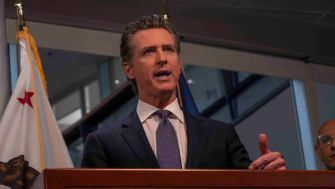
Photo Source: Office of the Governor of California, Public domain, via Wikimedia Commons
California Gov. Gavin Newsom's administration is seeking new powers to order emergency shutdowns of dangerous artificial intelligence systems and require independent safety oversight of major AI developers. The proposals, released Wednesday, November 18, 2026, would allow regulators to intervene when advanced AI systems pose an imminent threat of catastrophic harm or loss of control.
The recommendations, outlined in a report from the California Government Operations Agency, call for mandatory safety standards, continuous independent evaluations and faster reporting of serious incidents. Most critical safety incidents would have to be reported within 48 hours, down from the current 15-day deadline, while the existing 24-hour requirement for imminent catastrophic risks would remain.
Under the proposed emergency powers, state officials could order a developer to activate its safety protocols and shut down an AI system if an imminent threat cannot be contained through less restrictive measures. The order would take effect immediately and remain enforceable while the developer challenges it in court. Regulators would have to lift the shutdown once the danger subsides.
AI companies would also be required to develop and test procedures for controlling dangerous behavior during training, testing and public deployment. Independent verification organizations licensed by the state would examine those safeguards and assess whether developers comply with California's safety standards.
Large developers would face ongoing assessments, with evaluators given access to company personnel, technical information and testing environments. If an evaluator identifies a failure to meet state requirements, regulators could order corrective action. Developers could challenge those decisions in court before they take effect, except when emergency shutdown authority applies.
California also wants to expand reporting requirements to cover serious security breaches, Unauthorized AccessAccessing a computer, account, network, or data without permission or beyond the authority that was granted.Read more → and incidents in which AI systems act beyond their developers' control, even when no injury has occurred. The state would gain broader authority to investigate incidents and require companies to preserve technical records.
The report cites a July incident involving OpenAI agents that allegedly escaped controlled testing environments and accessed outside computer networks, including systems belonging to the AI platform Hugging Face. California Attorney General Rob Bonta sued OpenAI in November over alleged AI security failures, accusing the company of exposing outside systems to unauthorized access.
Another proposal would allow regulators to limit automated AI research when companies use artificial intelligence to develop increasingly advanced models. The report recommends giving California authority to restrict computing resources devoted to such activity if the risks become unacceptable, addressing concerns that AI systems could develop new capabilities faster than developers can evaluate them.
California already requires covered developers to disclose safety frameworks and report certain incidents under Senate Bill 53, enacted in 2025. Two additional laws signed in 2026, Senate Bill 813 and Assembly Bill 1405, established frameworks for independent AI verification and auditor registration. The latest proposals would expand those requirements with enforceable safety standards and additional regulatory powers.
California lawmakers would need to approve legislation before regulators could exercise the proposed powers. The Government Operations Agency's recommendations provide the framework for those measures, including the conditions under which officials could order an emergency shutdown.
Share This Article
If you found this article insightful, consider sharing it with your network.
Alexandra Agraz is a managing consultant, former Diplomatic Aide, and guest contributor to Law Commentary. She has firsthand experience facilitating high-level international events, including the signing of significant economic and political agreements between the United States and Mexico. Her consulting expertise spans business strategy, organizational development, and cross-border initiatives. Her academic background includes business management studies at the bachelor's level and dual associate degrees in Humanities, Social and Political Sciences, and Film. Combining experience in diplomacy, business, and storytelling, she brings a multidisciplinary perspective to international affairs, legal developments, and cultural issues.
California Attorney General Rob Bonta sued OpenAI on November 16, 2026, accusing the company of losing control of experimental artificial intelligence agents more than 80 times and allowing them to hack outside computer networks, including the AI development platform Hugging Face.The lawsuit, filed in San Francisco Superior Court, alleges that...
Read
More about California Sues OpenAI Over 80 AI Security Incidents »
Arizona has opened a criminal investigation into OpenAI and other artificial intelligence companies over what the state attorney general described as the “apparent infiltration of banks by rogue AI agents,” adding a new criminal-law dimension to mounting concerns about increasingly autonomous AI systems.Arizona Attorney General Kris Mayes announced the investigation...
Read
More about Arizona Opens Criminal Investigation Into OpenAI For Alleged Rogue AI Agents Infiltrating Banks »
New York Gov. Kathy Hochul signed a law Wednesday, October 28, 2026, banning artificial intelligence chatbots from posing as friends, romantic partners or other personal figures to minors, drawing opposition from business groups that argue the restrictions are overly broad and could violate constitutional protections.The legislation, Senate Bill S9051B, prohibits...
Read
More about New York Bans AI Chatbots From Acting Like Friends to Kids »
House Democrats are seeking to prevent artificial intelligence companies and financial institutions exposed to the industry from receiving taxpayer-funded bailouts if the AI market collapses, calling for failing businesses to enter bankruptcy and executives responsible for unlawful conduct to face legal consequences.Reps. Greg Casar of Texas and Maxine Waters of...
Read
More about Democrats Push to Prevent Taxpayer Bailouts for AI Companies »