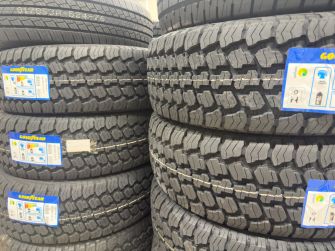
California has approved the nation’s first efficiency standards for replacement tires, setting new performance requirements for most tires sold for passenger cars and light-duty trucks in the state beginning in 2029.
The California Energy Commission voted unanimously Aug. 17 to adopt the Replacement Tire Efficiency Program. The rules limit how much energy covered tires can lose as they roll and require a minimum level of wet grip, a safety measure tied to traction and braking on wet roads.
Replacement tires are often less efficient than the tires installed on new vehicles, according to the commission. The difference comes partly from rolling resistance, which measures the energy lost as a tire rolls and flexes against the road. A tire with lower rolling resistance requires less energy to keep a vehicle moving, which can improve gasoline mileage and extend electric-vehicle range.
The CEC estimates the standards will eventually save California drivers nearly $1 billion a year in gasoline and electricity costs while cutting carbon dioxide emissions by about 2 million metric tons annually. The agency puts the added cost at about $1.50 per tire during the first phase and $6.50 during the second. It projects a typical gasoline vehicle could save about $179 in fuel over the life of a set of tires under the later standard.
The first efficiency limits apply to covered tires manufactured beginning Jan. 1, 2029, with stricter requirements taking effect in 2033. Specialty categories including certain competition, winter, off-road, used, retreaded and limited-production tires are exempt from some of the performance requirements.
Manufacturers and brand owners will also have to report covered tire models to a state database. Tires subject to the program generally must satisfy the applicable standards and reporting requirements before they can be sold or offered for sale in California, bringing retailers as well as manufacturers within the regulatory system.
The legal authority for the program dates to 2003, when California lawmakers passed Assembly Bill 844. The law directed the CEC to develop a statewide program aimed at making replacement tires at least as energy efficient, on average, as tires installed as original equipment on new passenger vehicles and light-duty trucks.
AB 844 also sets boundaries for the commission’s rulemaking authority. The statute requires efficiency standards to be technically feasible and cost-effective while preserving tire safety, average tire life and the state’s management of discarded tires. Administrative agencies must exercise the authority granted by the Legislature and follow the conditions lawmakers attach to that authority.
The commission concluded that available tire technology can meet the new efficiency levels while maintaining wet grip and tire life. The separate wet-grip requirement is designed to ensure that improvements in rolling resistance are paired with an important measure of tire safety.
California’s action follows an unusually long regulatory history. The CEC paused its earlier tire-efficiency rulemaking in 2012 while the federal government developed its own program. Congress later directed federal regulators to establish minimum tire performance standards, but that rulemaking was halted in 2017. California restarted its proceeding in 2020.
Federal law creates another important boundary for the state program. Under the doctrine of federal preemption, federal law takes priority when Congress has reserved an area for federal regulation or when state and federal requirements conflict.
Congress drew a specific distinction in federal tire law. Federal rules govern certain tire fuel-efficiency consumer-information requirements, while the statute preserves state authority to regulate the fuel efficiency of tires, including testing methods. That provision gives California room to establish performance standards alongside the federal regulatory system.
Tire-industry reaction to the final program was mixed. Michelin supported the efficiency thresholds and the revised 2029 and 2033 schedule. The U.S. Tire Manufacturers Association supported several changes and the later compliance dates while raising concerns about the data supporting some light-truck standards and urging the commission to assess the first phase before imposing the stricter requirements.
The Specialty Equipment Market Association also credited the CEC with making changes to the proposal while arguing that the regulation could increase costs, reduce consumer choice and affect small businesses. The commission ultimately found that the adopted standards met California’s requirements for feasibility, cost-effectiveness and safety.
The Aug. 17 vote advances the regulations to the next stage of California’s rulemaking process. The commission directed staff to prepare the final regulatory record for submission to the Office of Administrative Law, which reviews state agency regulations for compliance with California’s Administrative Procedure Act. If approved, the regulations will be filed with the Secretary of State, with the first-tier performance standards scheduled to apply in 2029.