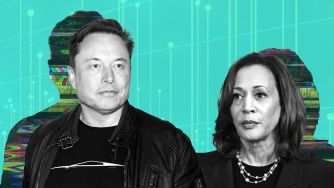
California’s new law, Assembly Bill 2839, aimed at combating AI-generated deepfakes in elections, faces a legal challenge after a federal judge issued a preliminary injunctionA preliminary injunction is a temporary court order issued before a case is finally decided that requires a party to take or stop an action while the litigation continues. Federal courts generally consider the likelihood of success, irreparable harm, the balance of equities, and the public interest before granting one.Read more → blocking most of its enforcement. The law, signed by Governor Gavin Newsom last month, targets the distribution of “materially deceptive” AI-generated media designed to mislead voters or harm candidates’ reputations. It allows anyone who views deceptive media to file lawsuits seeking damages against those responsible for creating or posting the content.
However, a lawsuit brought by former Los Angeles resident and screenwriter Daniel Kohls—along with a separate challenge by the satirical website The Babylon Bee—has put the law’s future in jeopardy. Kohls, whose viral deepfake video of Vice President Kamala Harris circulated widely, argues the law violates the First Amendment's protections on free speech. His legal team contends that the state has overreached, restricting not only harmful deepfakes but also political satire and parody, forms of expression long protected by the Constitution.
Deepfakes, AI-generated media that manipulate images, video, or audio to create convincing but false depictions of real people, have emerged as a powerful tool for both humor and misinformation. While some use this technology for parody, others exploit it to spread false narratives that can undermine democratic processes. California’s law aims to curb the latter by prohibiting the distribution of manipulated content that could mislead voters about a candidate's actions or statements, particularly in the months leading up to an election.
The state’s attorney general defended the law, pointing to the global threat deepfakes pose to elections, citing examples from Slovakia and Bangladesh, where disinformation campaigns have eroded public trust. Governor Newsom, in promoting the law, argued it was necessary to prevent AI-driven disinformation from undermining democracy, particularly in the lead-up to the 2024 presidential election.
Kohls’s lawsuit centers on claims that the law infringes on free speech, especially satire and parody. His legal team argues that, under existing legal precedent, people have broad rights to create and distribute even false information about political candidates. They cite the U.S. Supreme Court’s 2012 ruling in United States v. Alvarez, which struck down the Stolen Valor Act and reinforced that false statements—outside of fraud and defamation—are generally protected under the First Amendment.
U.S. District Judge John Mendez, in granting the injunction, recognized the state’s interest in preserving election integrity but ruled that the law's broad restrictions on deepfakes go beyond what the Constitution allows. “While a well-founded fear of a digitally manipulated media landscape may be justified, this fear does not give legislators unbridled license to bulldoze over the longstanding tradition of critique, parody, and satire,” Mendez wrote.
According to the consumer advocacy group Public Citizen, 19 U.S. states have passed laws regulating AI-generated media in elections. Most of these laws require disclaimers or restrict the distribution of misleading content during specified election periods. However, California’s statute stands out for its provision allowing any viewer of a deepfake to sue; a feature critics say could overwhelm courts with lawsuits and chill legitimate political discourse.
Despite the setback, Governor Newsom’s office expressed confidence that the law would ultimately withstand judicial scrutiny. Meanwhile, the Babylon Bee has mocked the law through AI-generated images of Governor Newsom engaging in absurd acts, testing the limits of satire under the new statute.
Share This Article
If you found this article insightful, consider sharing it with your network.
Law Commentary’s Staff Writers are dedicated legal professionals and journalists who excel at making complex legal topics accessible and relatable. They are committed to providing clear, accurate commentary that helps readers understand the impact of legal news on their daily lives.
Elon Musk’s artificial intelligence company xAI has won a temporary court order blocking Minnesota from enforcing its first-in-the-nation ban on AI tools that can generate realistic nude images of identifiable people, escalating a First Amendment fight over Grok and AI-generated sexual images.The U.S. Court of Appeals for the Eighth Circuit...
Read
More »
California will require advertisers to tell consumers when a realistic actor selling a product or service was generated by artificial intelligence under a new law signed Wednesday by Gov. Gavin Newsom.Senate Bill 1050 requires a clear and conspicuous disclosure when an audio, video or audiovisual advertisement prominently features an AI-generated...
Read
More »
California is banning AI chatbot toys for children under 16 after safety tests found some products could discuss sexual topics and tell kids where to find knives, pills and matches.Gov. Gavin Newsom signed Senate Bill 867 on Sept. 10, creating a four-year moratorium on the manufacture and sale of covered...
Read
More »
California will bar social media platforms from offering addictive features such as infinite scroll and autoplay to users under 16, impose new safeguards on AI companion chatbots and expose some companies to damages reaching $1 million per child under a sweeping package signed Thursday by Gov. Gavin Newsom.Signed September 10,...
Read
More »
AI-generated nude and sexual deepfakes can now lead to criminal charges under federal law and in a growing number of states, as lawmakers move to punish realistic sexual images created or shared without a person's consent.The rules remain a patchwork. Federal law largely targets publication, while states including Florida, Texas...
Read
More »
We use cookies and similar technologies to help our website function, understand how visitors use our site, and improve your experience. Some cookies are necessary for the website to operate, while others may be used for analytics or advertising.