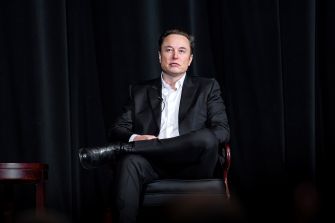
Photo Source: Trevor Cokley, Public domain, via Wikimedia Commons
Elon Musk’s artificial intelligence company xAI has won a temporary court order blocking Minnesota from enforcing its first-in-the-nation ban on AI tools that can generate realistic nude images of identifiable people, escalating a First Amendment fight over Grok and AI-generated sexual images.
The U.S. Court of Appeals for the Eighth Circuit granted xAI an injunction pending appeal on October 2, 2026, preventing Minnesota Attorney General Keith Ellison from enforcing the challenged law against the company while the appeal moves forward. The one-sentence order gave no reasoning and left the constitutionality of the statute for later review.
The ruling gives xAI the relief U.S. District Judge Donovan W. Frank denied in September, when he allowed the law to remain enforceable against the company while its constitutional challenge continued.
xAI argues Minnesota went beyond targeting nonconsensual deepfake pornography by restricting technology capable of producing protected expression. The state says its law regulates a product function tied to digital sexual exploitation rather than speech protected by the First Amendment.
Minnesota’s law took effect August 1. It prohibits operators of websites, applications, software, and other services from allowing users to access technology that can “nudify” an image or video.
A generated or altered image falls within the law when technology adds or creates an intimate body part that was not shown in the original and produces a realistic result appearing to depict an identifiable person. The attorney general can seek civil penalties of up to $500,000 for each unlawful access, download, or use.
People depicted in prohibited images may also bring civil claims seeking damages, attorney fees, and court orders stopping the conduct.
The measure differs from laws that mainly punish people who create or distribute nonconsensual sexual deepfakes. Minnesota places responsibility directly on companies that provide automated tools capable of generating the images, making the law a broader test of how far states can go in regulating AI systems before harmful content is distributed.
xAI sued Ellison in July, arguing the statute reaches consensual images, privately created material, and artistic, political, educational, or satirical expression. The company says the law applies regardless of whether the person depicted consented and restricts expression based on its content.
That argument puts the dispute squarely under the First Amendment. xAI contends the law should face strict scrutiny, a demanding constitutional test that requires the government to show that a restriction serves a compelling interest and is narrowly tailored to achieve it.
Minnesota has countered that Grok Imagine’s nudification function is a technological product feature rather than protected speech by xAI. State lawyers argue the law targets what automated tools can do and the harms associated with those capabilities.
The state has also pointed to the circumstances that prompted lawmakers to act, including testimony about women whose photographs were transformed into fabricated sexual images and concerns involving AI-generated sexual material depicting children.
Frank focused on the requirements for preliminary relief when he rejected xAI’s request on September 4. He found that the company’s delay in challenging the law weakened its claim of immediate and irreparable harm and concluded that the balance of harms and public interest favored Minnesota at that stage.
The Eighth Circuit’s order changes the practical effect of that ruling while the appeal continues, but it does not resolve whether Minnesota’s law violates the First Amendment.
The constitutional case also remains active in federal district court, where Minnesota has moved to dismiss xAI’s claims. Briefing on that request was stayed while the preliminary injunctionA preliminary injunction is a temporary court order issued before a case is finally decided that requires a party to take or stop an action while the litigation continues. Federal courts generally consider the likelihood of success, irreparable harm, the balance of equities, and the public interest before granting one.Read more → appeal proceeds.
xAI’s opening appellate brief is due October 29, 2026. The appeal could determine whether Minnesota can enforce its approach against the company and shape how courts assess state restrictions on AI tools capable of generating sexualized images of real people.
Share This Article
If you found this article insightful, consider sharing it with your network.
Bridget studied Communications and Marketing at California State University, Long Beach. She also has experience in the live music events industry, which has allowed her to travel to festivals around the world. During this period, she acquired valuable expertise in branding, marketing, event planning, and public relations.
OpenAI, Anthropic, Google and SpaceXAI have been hit with a federal antitrust lawsuit accusing the rival artificial intelligence companies of illegally agreeing to slow development of ChatGPT, Claude, Gemini and Grok in the name of AI safety.Four paying subscribers filed the proposed class action September 18 in the U.S. District...
Read
More »
New York prosecutors have taken down 12 websites accused of selling AI-generated pornography depicting about 1,200 real people without their consent, including actors, politicians, athletes, musicians and social media figures.Manhattan District Attorney Alvin Bragg announced the September 14 action after his office obtained a court order authorizing the seizure of...
Read
More »
Minnesota is asking a federal judge to reject a bid by Elon Musk’s artificial intelligence company, xAI, to block the state’s AI nudification ban, arguing that Grok Imagine’s nudification feature is a product function rather than speech protected by the First Amendment.Attorney General Keith Ellison made the argument in an...
Read
More »
The Seattle Times and Newsday have sued OpenAI and Microsoft, accusing the companies of copying hundreds of thousands of articles without permission to train AI systems and asking a federal court to destroy models and training datasets that incorporate their journalism.The copyright infringement lawsuit, filed September 4 in the U.S....
Read
More »
A federal appeals court has upheld the dismissal of a charge against Wisconsin resident Steven Anderegg for privately possessing obscene AI-generated sexual images depicting fictional children in his home, finding that existing Supreme Court precedent protects that narrow form of possession under the First Amendment. Separate federal charges accusing him...
Read
More »