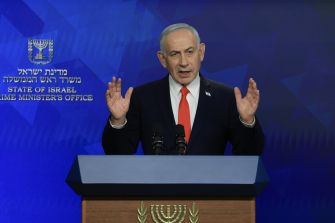
New York City almost certainly lacks the legal authority to arrest Israeli Prime Minister Benjamin Netanyahu solely because he enters the city, despite an outstanding arrest warrant issued by the International Criminal Court.
Mayor Zohran Mamdani has said the city’s Law Department is examining what authority New York officials might have if Netanyahu travels to Manhattan for the United Nations General Assembly. President Donald Trump has responded that Netanyahu will not be arrested in the United States. The Israeli leader is expected to attend the General Assembly in September.
The dispute presents a basic legal question that can become obscured by political rhetoric: Does an ICC warrant operate like a warrant issued by a New York or federal judge?
It does not.
The ICC issued arrest warrants for Netanyahu and former Israeli Defense Minister Yoav Gallant in November 2024. The court said there were reasonable grounds to believe they bore responsibility for alleged war crimes and crimes against humanity connected to Israel’s military campaign in Gaza. Netanyahu denies the accusations, and Israel disputes the court’s authority. The warrant represents a judicial finding that the case may proceed. It is not a criminal conviction.
The ICC has no police force. It depends on national governments to arrest and surrender defendants. Countries that joined the Rome Statute, the treaty that created the court, generally have a duty to cooperate with its arrest requests.
The United States never joined that treaty. Israel did not join it either. An ICC warrant therefore does not automatically become an enforceable warrant in the American court system.
A useful comparison is a foreign court judgment. A ruling from another country does not ordinarily authorize an American police officer to take immediate action. Some domestic law, treaty, or court procedure must first recognize and enforce it. The same principle applies to an ICC arrest warrant.
Federal law creates an even greater obstacle for New York City. The American Servicemembers’ Protection Act generally prohibits federal, state and local agencies from cooperating with the ICC in response to requests made under the Rome Statute. It also bars those governments from providing support to the court or extraditing a person to it.
The law gives a president limited power to waive certain restrictions after making required findings and notifying Congress. No such waiver has been issued for Netanyahu. The Trump administration has instead rejected the ICC warrant and imposed sanctions against court officials.
Directing the New York Police Department to execute the ICC warrant would therefore place the city in conflict with federal law. A mayor does not have authority to override an act of Congress, change the country’s treaty obligations, or independently establish a relationship between the United States and an international court.
New York law does allow police officers to make arrests without a warrant when they have reasonable cause to believe someone committed a qualifying offense. But entering New York while named in an ICC warrant is not itself a state crime.
The conduct described by the ICC also occurred outside New York. State criminal jurisdiction generally requires a connection to New York, such as criminal conduct occurring within the state, a harmful result occurring there, or an offense intended to affect the state. Alleged acts committed during a military campaign in Gaza would not ordinarily satisfy those requirements.
The mayor controls the NYPD as part of the city government, but that administrative authority does not permit him to invent an offense or convert an international warrant into a New York warrant. A lawful arrest still requires a valid legal basis.
New York prosecutors would face the same limitation. Neither the mayor nor a district attorney could simply declare that the ICC’s allegations amount to a prosecutable New York crime. Any attempt to detain Netanyahu without a recognized warrant or domestic charge would likely produce an immediate challenge in federal court seeking his release.
His expected destination would create additional barriers.
Under the agreement establishing the United Nations headquarters in Manhattan, federal, state and local authorities generally may not obstruct representatives of member nations traveling to or from the headquarters district. The agreement also provides that local police may not enter the district to perform official duties without the consent of the U.N. secretary-general.
The headquarters is not an all-purpose sanctuary from a valid American arrest warrant. But the agreement would prevent the NYPD from treating the U.N. grounds like an ordinary city location, particularly when no federal or state warrant exists.
A separate international agreement provides representatives of U.N. member states with immunity from personal arrest or detention while performing their official functions and traveling to and from U.N. meetings. The United States acceded to that convention in 1970.
Netanyahu would likely argue that his attendance at the General Assembly places him within those protections. Israel could waive the immunity, but such a decision would be highly unlikely while its government continues to reject the ICC case.
Netanyahu’s position as a sitting head of government adds another layer. Customary international law generally recognizes personal immunity for incumbent heads of state, heads of government and foreign ministers when they appear before another country’s domestic courts.
The International Court of Justice applied that principle in a case involving an arrest warrant issued by Belgium against a sitting foreign minister. The court concluded that the official remained immune from foreign criminal jurisdiction while in office, even though the accusations involved serious international crimes.
The ICC follows a different rule within its own proceedings. A defendant’s official position does not automatically shield the person from the court’s jurisdiction. But the ICC’s internal rule does not by itself erase the immunities recognized by a country that never joined the Rome Statute.
The distinction is important. The ICC may lawfully issue a warrant under its own jurisdiction while the United States remains legally unwilling or unable to execute it.
A different result would require federal action. Congress could change the laws governing cooperation with the ICC. A president could invoke available waiver authority. Federal prosecutors could also pursue an independent American criminal case if a federal statute applied and the Justice Department obtained a warrant from a U.S. judge.
None of those steps could be replaced by an order from New York City Hall.
Netanyahu could also be arrested if he committed an ordinary crime while in New York, although his diplomatic and official immunities would still require careful review. His mere arrival in the city, however, would not supply probable cause for an arrest.
Mamdani may direct city lawyers to study the issue and publicly support the ICC. He cannot transform the court’s warrant into an enforceable New York order.
Under current law, an attempted city arrest would face federal statutory restrictions, the absence of a domestic criminal charge, limits on New York’s territorial jurisdiction, protections connected to the United Nations, and Netanyahu’s immunity as a sitting head of government.
The political argument may continue through the General Assembly. The legal conclusion is far narrower: New York City cannot lawfully arrest Netanyahu merely because the ICC wants him taken into custody.