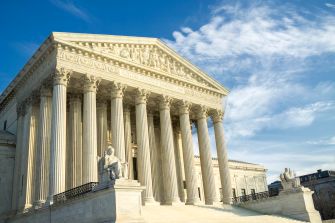
The U.S. Supreme Court on Monday rejected the Trump administration's last-minute attempt to block California from counting mail ballots associated with more than 20,000 voters suspected of being noncitizens, leaving the state's election procedures intact one day before the November 3, 2026, midterm elections.
The justices denied the November 2 emergency request without a written opinion or noted dissent, allowing election officials to continue processing ballots despite the Justice Department's efforts to separate votes tied to individuals whose citizenship federal investigators questioned.
Solicitor General D. John Sauer had asked the Supreme Court to intervene after a federal appeals court rejected the administration's request Friday. Prosecutors argued that continued ballot processing could make it impossible to identify votes later determined to have been cast illegally.
The government's evidence has faced mounting scrutiny. An analysis by UCLA's Voting Rights Project found that 8,880 of the 20,930 people on the Justice Department's list, approximately 42%, did not match anyone in California's voter file. Researchers also identified at least 22 U.S. citizens and nearly 7,500 people they considered highly likely to be naturalized citizens incorrectly flagged as noncitizens.
The findings, submitted in separate litigation challenging the federal government's voter data, raised further questions about the accuracy of the records underlying the administration's allegations. The Justice Department disputed the analysis and maintained that additional citizenship verification was necessary to prevent unlawful votes from being counted.
California officials also challenged the list, identifying records associated with citizens, people absent from voter rolls and individuals who had never received ballots. Federal prosecutors have yet to establish how many people on the list actually voted.
The Supreme Court's decision follows a 2-1 ruling Friday by the Ninth Circuit Court of Appeals, which upheld an October 28 decision by U.S. District Judge David O. Carter rejecting the administration's proposed restrictions.
Judges Mark J. Bennett and Gabriel P. Sanchez cited the risk of excluding eligible voters and disrupting ballot counting. Judge Patrick J. Bumatay dissented, arguing that federal authorities had sufficient grounds to seek measures preventing unlawful votes from being counted.
Carter found that the Justice Department's request threatened California's constitutional authority to administer elections and conflicted with federal voting protections. Although federal law prohibits noncitizens from voting in federal elections, the administration faced questions over its authority to compel states to impose new ballot-processing procedures during an election already underway.
Federal prosecutors have also subpoenaed California election workers as part of a criminal investigation into alleged noncitizen voting. Three Los Angeles County employees are scheduled to appear before a grand jury on November 4, with investigators seeking election records and information about voter eligibility checks.
The administration has encountered separate legal challenges over its efforts to obtain voter information nationwide. In October, a federal judge struck down the Justice Department's voter-roll policy, finding that federal officials exceeded their authority by collecting state registration records for citizenship checks.
Carter has scheduled a November 13 evidentiary hearing to examine the disputed voter information and the administration's request for additional restrictions.