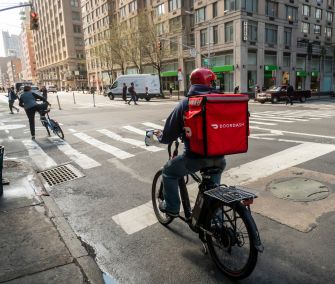
DoorDash will pay $131.5 million after New York City found that more than 260,000 delivery workers were underpaid, went unpaid or received their earnings late, Mayor Zohran Mamdani announced Tuesday.
More than $115 million will go directly to workers, while DoorDash will pay another $16.7 million in civil penalties and costs. City officials described the agreement as the largest worker settlement in New York City history and the largest food delivery worker settlement secured by a U.S. municipality.
The Department of Consumer and Worker Protection opened its investigation after dozens of workers reported problems receiving money they had earned. Regulators eventually examined more than 152 million payment transactions and 110 million hours of work to determine whether DoorDash complied with the city’s delivery worker laws.
Much of the money stems from a dispute over how DoorDash calculated time workers spent logged into the app between deliveries. DoorDash says more than $83 million resolves the disagreement over that on-call time, while $12.3 million covers workers whose payments were missing or late.
The company acknowledged errors involving those missing and delayed payments. DoorDash blamed technical bugs, incomplete banking information and complications involving deliveries that crossed city boundaries, included multiple stops or were canceled.
“Simply put, we screwed up,” DoorDash said in a statement. The company says it has corrected the technical problems and strengthened its payment controls.
DoorDash disputes the city’s position on the larger on-call-time issue. The company maintains that its calculation complied with city law and says workers were paid for time spent online between deliveries. As part of the settlement, DoorDash agreed to use the city’s method going forward.
New York City’s minimum pay system for app-based delivery workers covers more than the minutes spent carrying an order from a restaurant or store to a customer. Apps must also account for certain time workers remain available on the platform between deliveries.
The current minimum pay rate is $22.13 per hour, excluding tips. DoorDash raised pay after the city began enforcing the rule in December 2023, but DCWP concluded that the company excluded several categories of trip and on-call time when calculating compensable hours. That disagreement accounts for the largest portion of the settlement.
City investigators also found thousands of workers received no payment for completed work and thousands more were paid after the deadline required by city law. Covered delivery apps must pay workers at least once each week and generally issue earnings within seven days after a pay period ends.
The settlement can produce payments well above the amount originally missing. DCWP says a worker who was owed $1,000 and received nothing would receive $3,000 under the agreement. A worker whose $1,000 payment arrived later than city law allows would receive $2,000.
Eligible workers will receive the money automatically based on DoorDash’s records. DCWP has already identified those eligible, removing the need for individual claims or supporting evidence.
Personalized notices are expected to begin arriving in late October for workers who experienced underpayments between April 22, 2022, and June 28, 2026. Recipients can choose an electronic payment or mailed check, while a smaller group affected by additional compensable-time calculation problems is expected to receive payments in early 2027.
DoorDash says approximately 264,000 workers will receive money. Each eligible worker will receive at least $10, according to the company, even when the underlying payment error was smaller. The median payment is expected to be about $48, while workers with more substantial violations could receive considerably more.
The agreement is separate from a $16.75 million settlement New York Attorney General Letitia James reached with DoorDash in 2025 over the company’s former practice of using customer tips when calculating guaranteed worker payments. That case involved practices between 2017 and 2019.
DoorDash will also face three years of enhanced city monitoring. The company must provide detailed payment data to DCWP, strengthen internal controls and make software changes affecting how trip and on-call time are recorded.
DCWP is also working with Workers Justice Project and the Workers’ Algorithm Observatory on software that will allow delivery workers to share their own trip and earnings data with regulators, giving the city an independent source to compare against DoorDash’s records.
An internal compliance monitor must document problems, track the company’s response, and submit annual reports to DCWP. The monitoring will cover minimum pay, trip disclosures, maximum trip distances, pay transparency, and tip transparency as the city enforces the settlement over the next three years.