We use cookies and similar technologies to help our website function, understand how visitors use our site, and improve your experience. Some cookies are necessary for the website to operate, while others may be used for analytics or advertising.
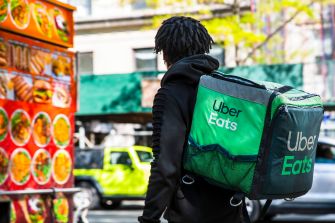
Photo Source: Karolis Kavolelis / Shutterstock.com
Uber, Amazon and Instacart have sued New York City to block a law that would give delivery workers new protections when companies remove them from their apps, arguing the requirements violate the Constitution and interfere with existing contracts.
The companies filed the lawsuit Wednesday, October 28, 2026, in Manhattan federal court, seeking to block Local Law 34 before it takes effect January 17, 2027. The measure requires delivery services to justify account removals, provide written notice and give workers a way to contest losing access to the apps they rely on for delivery work.
Under the law, companies would need just cause, a legitimate economic reason or a legal obligation before removing couriers who have completed a 30-day probationary period. Most misconduct cases would also move through a progressive disciplinary process, with exceptions for serious violations.
Delivery services must provide written explanations within 72 hours of deactivation. Workers can challenge their removal through an internal review process, file complaints with the city’s Department of Consumer and Worker Protection or pursue legal action. Available remedies include reinstatement and lost earnings.
The companies say Local Law 34 goes too far by rewriting agreements that currently give them broad authority to decide who can remain on their platforms. Their lawsuit relies in part on the Constitution’s Contracts Clause and also raises First and Fourteenth Amendment claims over how the city regulates deactivation decisions and enforcement.
The new challenge follows a July ruling in favor of Uber and Lyft over similar New York City restrictions. U.S. District Judge Gregory H. Woods temporarily blocked Local Law 52, which imposed notice and disciplinary requirements before ride-hailing companies could deactivate drivers.
Woods found Uber and Lyft were likely to succeed on their claim that the measure substantially interfered with existing contracts. Uber, Amazon and Instacart have identified that case as related as they seek similar relief against the city’s separate protections for delivery couriers.
The companies also say Local Law 34 could delay their ability to remove workers accused of fraud, theft, harassment and other violations of platform safety rules. Instacart has focused particular attention on a provision allowing couriers deactivated during the six years before the law takes effect to seek reinstatement.
In an October 28 statement, Instacart said the provision could require companies to reconsider accounts removed years earlier for serious misconduct, creating risks for customers, shoppers and retail partners.
New York City’s Department of Consumer and Worker Protection defended the law on October 30, saying it was designed to protect workers from losing access to their income without explanation while preserving public safety.
“New York City deserves safe streets and delivery workers deserve dignity and due process,” Commissioner Samuel A.A. Levine said in a statement. He added that the department would continue defending the law.
A federal judge must now consider the companies' request for a preliminary injunctionA preliminary injunction is a temporary court order issued before a case is finally decided that requires a party to take or stop an action while the litigation continues. Federal courts generally consider the likelihood of success, irreparable harm, the balance of equities, and the public interest before granting one.Read more → ahead of Local Law 34's January 17 effective date.
Share This Article
If you found this article insightful, consider sharing it with your network.
Xiolene is a contributing journalist with more than a decade of experience in management, operations, and client service. Her background spans the veterinary and beauty industries, giving her experience working with businesses, consumers, employees, and service-focused organizations. Xiolene brings a practical business and consumer perspective to her coverage, focusing on making complex news and current events clear and accessible to readers.
DoorDash will pay $131.5 million after New York City found that more than 260,000 delivery workers were underpaid, went unpaid or received their earnings late, Mayor Zohran Mamdani announced Tuesday.More than $115 million will go directly to workers, while DoorDash will pay another $16.7 million in civil penalties and costs....
Read
More about DoorDash to Pay $131.5 Million After NYC Finds 260,000 Delivery Workers Were Underpaid »
A coalition representing hundreds of New York City grocers and bodegas has filed two lawsuits seeking to block Mayor Zohran Mamdani’s $70 million plan for five city-owned grocery stores, arguing that public support for the program will place immigrant and minority-owned businesses at an unlawful disadvantage.The Multicultural Business Coalition filed...
Read
More about NYC Grocers Sue to Block Mamdani’s $70 Million City-Owned Grocery Store Plan »
New York City Mayor Zohran Mamdani’s administration has sued the City Council to block a new law requiring up to $10,000 in payments to public school paraprofessionals, arguing lawmakers cannot set employee compensation outside the city’s collective bargaining process.The lawsuit, filed Aug. 19 in New York State Supreme Court in...
Read
More about Zohran Mamdani Sues NYC Council to Block $10,000 Bonuses for School Paraprofessionals »
The battle over the “gig economy” continues to rage as the State of California seeks rehearing or review of a Ninth Circuit Court of Appeals decision that found that Assembly Bill 5 may have violated the rights of Uber, Postmates, and their drivers.
California Assembly Bill 5 (AB 5) was...
Read
More about The Continuing Saga of AB 5: California Seeks Full Ninth Circuit Review »