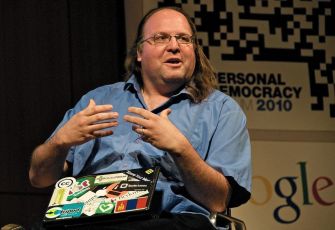
A federal judge in San Francisco dismissed a lawsuit on Friday, November 22, 2024, brought by University of Massachusetts professor Ethan Zuckerman against Meta, the parent company of Facebook. The case sought legal assurances that Meta could not sue Zuckerman if he released a browser extension called "Unfollow Everything 2.0," which would allow Facebook users to efficiently unfollow friends, groups, and pages, effectively turning off their newsfeeds.
U.S. District Judge Jacqueline Scott Corley dismissed the lawsuit on technical grounds, ruling that the case was not ripe for adjudication because Zuckerman had not yet developed the product. The judge determined that the court lacked subject matter jurisdiction, stating that Zuckerman’s request for a declaratory judgment amounted to seeking an advisory opinion, which federal courts are not authorized to provide.
The ripeness doctrine is a principle in U.S. constitutional law that prevents courts from hearing cases that are premature or speculative. Under this doctrine, a case is considered "ripe" for adjudication only if it involves an actual, concrete dispute rather than hypothetical or contingent issues. Courts evaluate ripeness to ensure that they are addressing legal questions grounded in present facts and controversies, rather than issuing advisory opinions. In the case of Zuckerman v. Meta, the court ruled that the lawsuit was not ripe because the product in question, "Unfollow Everything 2.0," had not yet been developed, making the alleged legal conflict too speculative to be resolved.
“Federal courts do not, and cannot, exist to give advisory opinions to assist investment decisions,” Judge Corley wrote. She further noted that “the alleged injury is too contingent upon uncertain events to satisfy the constitutional ripeness requirement.”
The lawsuit, filed by the Knight First Amendment Institute at Columbia University on Zuckerman’s behalf, sought a declaratory judgment to preemptively establish that his planned tool, "Unfollow Everything 2.0," would not violate federal or California computer fraud laws or face other legal challenges from Meta. It also sought to establish that the tool was protected under Section 230 of the Communications Decency Act, which shields internet-based businesses from liability for user-generated content.
A declaratory judgment is a legal decision by a court that clarifies the rights or obligations of parties in a dispute without ordering anyone to take specific actions or pay damages. It’s often used to settle legal questions before a conflict escalates further, giving people or businesses clarity about their legal position. In Zuckerman v. Meta, the professor wanted a declaratory judgment to confirm he could release his tool, "Unfollow Everything 2.0," without facing a lawsuit from Meta. However, the court said it couldn’t provide a ruling because the tool wasn’t built yet, making the dispute too hypothetical to decide.
The Court, in effect, held that for a declaratory judgment action to proceed, a dispute must have clear, immediate stakes and not hinge on uncertain future events, such as whether Meta would sue over a tool that has yet to be created.
Zuckerman argued that the tool would empower users to take greater control of their social media experiences by simplifying the process of curating content on Facebook. He expressed frustration with what he sees as Meta’s outsized control over public discourse and its history of opposing third-party tools designed to alter user experiences on its platform.
“I’m suing Facebook to make it better,” Zuckerman said in a statement. “The major social media companies have too much control over what content their users see and don’t see. We’re bringing this lawsuit to give people more control over their social media experience and data.”
Zuckerman, who estimates his team could complete the tool in six weeks, asserted that the lawsuit’s focus was on the tool’s purpose, not its technical implementation.
Zuckerman pointed to Meta’s history of litigation against third-party developers as evidence of a “real and reasonable fear” of legal action. He cited a 2021 cease-and-desist letter Meta sent to UK developer Louis Barclay, who created an earlier version of "Unfollow Everything" with similar functionality.
Judge Corley rejected this argument, noting that Zuckerman had no direct connection to Barclay and that Meta had not contacted Zuckerman regarding Unfollow Everything 2.0. “If all that mattered were the core function or outcome the tool enabled, then this dispute could be about any extension that automated an interaction with Facebook, real or hypothetical,” she wrote.
The case was dismissed without prejudice, meaning Zuckerman retains the right to refile the lawsuit once the project is further developed and the legal issues become more concrete. Judge Corley stated that even if the court had jurisdiction, it would decline to hear the case until Zuckerman’s claims were more specific and less speculative.