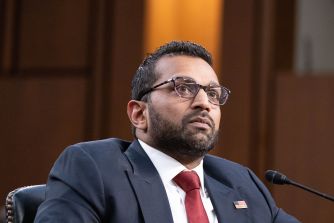
Nine former FBI employees fired after investigating President Donald Trump's handling of classified documents have sued FBI Director Kash Patel, alleging they were targeted for political retaliation simply because they worked on the Mar-a-Lago case.
The lawsuit, filed October 15, 2026, in the U.S. District Court for the District of Columbia, seeks reinstatement and back pay for the former agents, intelligence analysts and operations specialists dismissed in February. The employees claim FBI leadership treated their investigative assignments as evidence of political disloyalty to Trump, despite their combined century of service to the bureau.
According to the 70-page complaint, the firings followed an urgent request from a member of Patel's advisory team to access records identifying personnel involved in the classified documents investigation. Eight employees were dismissed less than 48 hours after the request, followed by a ninth the next day.
On February 23, FBI agent Miles Starr, a member of Patel's Director's Advisory Team, contacted Assistant Director Roman Rozhavsky seeking access to files from the investigation, internally known as Plasmic Echo. Starr said he was acting on Patel's instructions but offered no explanation for the request, according to the filing.
Jennifer Bacon, then a counterintelligence section chief, authorized access to the records, which contained the names of all nine employees. Eight, including Bacon, received termination notices on February 25. The final employee was dismissed on February 26. Their attorneys cite the sequence as evidence that participation in the Trump investigation prompted the removals.
The complaint in Bacon v. Patel names Patel, Attorney General Todd Blanche, the FBI and the Justice Department as defendants. It alleges violations of the First Amendment's protections against political retaliation and the Fifth Amendment's guarantee of due process. Two plaintiffs also claim that officials violated the constitutional separation of powers by disregarding federal employment protections established by Congress.
The former employees maintain that their assignments to Plasmic Echo were based on their expertise in counterintelligence, espionage and national security. Some participated in the August 8, 2022, search of Trump's Mar-a-Lago estate in Palm Beach, Florida, while another signed the affidavit used to obtain the search warrant.
Their careers also included investigations into the Boston Marathon bombing, hostage recoveries and the 2024 assassination attempt against Trump in Butler, Pennsylvania. Several specialized in threats involving Iranian intelligence operations.
The lawsuit alleges that Patel personally praised some of the same employees before dismissing them. In 2025, he thanked Bacon following a counterintelligence presentation to security officials in Australia. Later that year, Patel shook hands with employee Harrison Kaufman and thanked him for his work on the investigation into pipe bombs planted near the Republican and Democratic national committee headquarters before the January 6, 2021, Capitol attack.
Another former employee, Jeremy Linton, received recognition from Patel following an operation involving a suspected MS-13 gang member. According to the complaint, the director posed for a photograph with Linton and his team and later sent him a signed copy.
The employees argue that their performance records contradict the administration's characterization of their work as politically motivated. Patel has accused dismissed personnel of weaponizing the FBI and told Congress that terminations followed internal investigations identifying inappropriate conduct.
Their dismissals came without internal disciplinary investigations, advance notice, hearings or opportunities to appeal, according to the complaint. The Fifth Amendment claim centers on whether the government deprived the employees of their protected employment interests without the procedures required by law.
The First Amendment claim challenges the alleged use of perceived political beliefs as grounds for termination. Federal employees generally receive constitutional protection against dismissal based solely on political affiliation or expression, although exceptions apply to certain positions where political loyalty is an appropriate job requirement. The former employees argue that those protections extend to their career FBI positions and that officials wrongly inferred their political views from their investigative assignments.
The termination letters also invoked Article II of the Constitution, which establishes presidential executive authority. Bacon and her eight co-plaintiffs argue that the FBI director's power to remove personnel remains subject to applicable federal laws and constitutional restrictions.
Bacon and fellow plaintiff Jeremy Linton, both military veterans, assert additional employment protections under the Civil Service Reform Act. Bacon also cites safeguards tied to her senior executive position. Their separation-of-powers claim argues that FBI leadership exceeded its authority by disregarding restrictions Congress placed on federal employee removals.
The dismissals came amid broader personnel changes targeting employees associated with investigations involving Trump. Blanche, who was deputy attorney general when the nine employees were fired, publicly described the administration as having "cleaned house" at the FBI by removing personnel connected to those cases. The lawsuit cites such statements as evidence of retaliatory intent.
Before becoming FBI director, Patel had publicly condemned the Mar-a-Lago search and criticized agents involved in the investigation. The former employees argue that those statements, combined with the circumstances of their dismissals, support their allegations of political retaliation.
The underlying classified documents investigation examined Trump's retention of government records after leaving the White House in January 2021. Former special counsel Jack Smith brought criminal charges accusing Trump of unlawfully retaining sensitive national defense information and obstructing efforts to recover it. Trump denied wrongdoing.
U.S. District Judge Aileen Cannon dismissed the prosecution in July 2024 after ruling that Smith had been improperly appointed. The decision addressed the legality of his appointment rather than the merits of the criminal allegations. The Justice Department subsequently abandoned its appeal following Trump's 2024 election victory.
Beyond the employees' individual claims, their attorneys argue that the firings disrupted sensitive national security operations. According to the complaint, ongoing counterintelligence and counterterrorism investigations were affected when active cases were inadequately transferred following the dismissals. Several of those removed had specialized knowledge of Iranian intelligence threats, and their terminations came shortly before U.S. and Israeli military operations against Iran.
The lawsuit joins other federal court challenges brought by former FBI personnel dismissed after investigating Trump. Employees assigned to Arctic Frost, the inquiry into efforts to overturn the 2020 presidential election, have also alleged political retaliation and violations of their due process rights.
The former employees are seeking reinstatement, back pay, declarations that their dismissals were unlawful and reimbursement of legal expenses. Their complaint also requests protection against further unlawful personnel actions. The case remains in its initial stages in federal court, where the employees' allegations and the administration's legal authority to dismiss them will be examined.