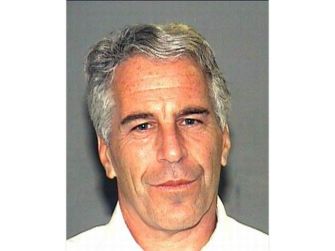
A forensic medicine expert says Jeffrey Epstein was murdered inside a New York federal jail in 2019, concluding that injuries documented during his autopsy indicate he was strangled from behind before his body was suspended from a bunk bed.
Michael Freeman presented his findings on November 16, 2026, after reviewing previously unpublished autopsy photographs and medical records and reconstructing the injuries. His conclusion challenges the New York City Office of Chief Medical Examiner's ruling that Epstein died by suicide while awaiting trial on federal sex trafficking charges.
The medical examiner's office said it stands by its original determination that Epstein died by suicide through hanging.
Freeman, editor-in-chief of the Journal of Forensic and Legal Medicine, identified two distinct marks on Epstein's neck that he believes could not have resulted from a single suicidal hanging. He also pointed to fractures in the throat, bleeding deep within the left shoulder and apparent facial injuries that he said were consistent with an assault.
A three-dimensional reconstruction led Freeman to conclude that pressure had been applied to Epstein's neck from behind. He believes a narrow, knotted strip of fabric found inside the cell may have been used to strangle Epstein before his body was suspended from the bed.
Marks above the ligature injury also appeared consistent with fingernail scratches, which Freeman interpreted as possible evidence that Epstein tried to remove something tightened around his neck.
Freeman worked with Swedish forensic pathologist Anders Eriksson and cognitive neuroscientist Itiel Dror. Their examination relied on the medical examiner's file provided by Epstein's brother, Mark Epstein, who has long challenged the suicide ruling.
Epstein was found dead on August 10, 2019, at the Metropolitan Correctional Center in Manhattan. His body was moved before investigators photographed its original position, and the suspected ligature was never preserved for forensic examination.
A June 2023 investigation by the Justice Department's Office of Inspector General documented extensive failures at the federal jail, including missed inmate checks, falsified records, staffing shortages and malfunctioning surveillance equipment.
Correctional officers had left Epstein alone for hours despite instructions that he be assigned a cellmate. They also failed to conduct required rounds and allowed excess bedding materials to accumulate inside his cell.
Federal investigators found no evidence contradicting the FBI's conclusion that Epstein's death did not involve criminal conduct.
The medical examiner who performed the original autopsy told Justice Department investigators that Epstein's injuries were consistent with suicide by hanging. She also found no defensive wounds or other signs of a struggle that she would have expected in a fatal strangulation.
Freeman's examination challenges that assessment. His research has yet to undergo peer review, and an academic journal declined to publish his findings. Forensic pathologist Michael Baden previously raised similar questions about fractures in Epstein's neck after reviewing autopsy evidence.
Freeman has not identified a suspected killer. Epstein's death remains officially classified as a suicide, and federal authorities have announced no plans to reopen the investigation following the new forensic presentation.