We use cookies and similar technologies to help our website function, understand how visitors use our site, and improve your experience. Some cookies are necessary for the website to operate, while others may be used for analytics or advertising.
A federal judge in Massachusetts has temporarily blocked the Trump administration's restrictions on internships for international students, finding that immigration officials abruptly reversed a 35-year-old policy without explaining the change or considering its impact on universities.
U.S. District Judge Julia E. Kobick issued the ruling Tuesday, November 17, 2026, suspending two Department of Homeland Security (DHS) directives that prevented foreign students from receiving academic credit for certain elective internships. The order allows colleges and universities to resume authorizing qualifying training opportunities while the lawsuit proceeds.
The decision follows a separate ruling a day earlier that struck down the administration's restrictions on how long international students could remain in the United States. Both challenges were brought by higher education organizations and concerned federal immigration policies affecting foreign students.
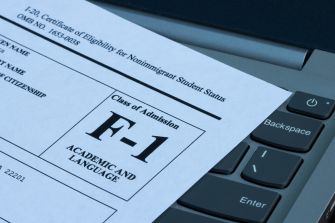
The latest ruling addresses Curricular Practical Training (CPT), which allows international students holding F-1 visas to participate in internships, cooperative education, and other work experience tied to their studies. Since 1991, federal authorities had permitted students to receive authorization for elective internships that earned academic credit.
That changed in August when the Student and Exchange Visitor Program, part of U.S. Immigration and Customs Enforcement (ICE), issued directives requiring internships to be mandatory for every student pursuing the same degree. Under the new interpretation, an international law student could participate in an externship with a federal judge only if the experience was required for graduation.
Federal officials also warned universities that improperly authorizing internships could expose administrators to civil or criminal penalties and potentially cost institutions their certification to enroll international students.
The restrictions prompted colleges to cancel internship authorizations, revise academic programs and withdraw previously approved training opportunities. Columbia University denied authorization to more than 120 international students, while at least 13 students at Grinnell College lost fall internship opportunities. Cornell University and Michigan State University reported that the loss of training opportunities contributed to students leaving academic programs.
Four higher education organizations challenged the directives in federal court on October 5, arguing that the administration had unlawfully departed from decades of established immigration policy. The lawsuit was brought by the Association of American Universities, Presidents' Alliance on Higher Education and Immigration, Association of Independent Colleges and Universities in Massachusetts, and NAFSA: Association of International Educators.
Government attorneys argued that the directives merely clarified existing regulations and that the organizations lacked grounds to challenge them. Kobick disagreed, citing federal rules adopted in 1991 and immigration guidance issued over subsequent decades that expressly permitted elective internships for academic credit.
The judge found that the administration had adopted a new interpretation without acknowledging the change, providing a reasoned explanation or considering the universities and students who had relied on the established policy.
Under the Administrative Procedure Act, federal agencies may change existing policies but must explain their decisions and account for significant reliance on previous rules. Kobick concluded that the organizations were likely to succeed in showing that the government's reversal was arbitrary and capricious.
The court also found that universities faced substantial harm from disrupted academic programs and the possibility of losing authorization to enroll foreign students. Those findings supported a preliminary injunctionA preliminary injunction is a temporary court order issued before a case is finally decided that requires a party to take or stop an action while the litigation continues. Federal courts generally consider the likelihood of success, irreparable harm, the balance of equities, and the public interest before granting one.Read more → suspending enforcement of both August directives pending further judicial review.
The order also bars federal officials from applying the new interpretation against the organizations that sued, their member institutions, employees and students, including in connection with training approvals issued before the restrictions took effect.
Universities have begun restoring access to qualifying internships. On November 18, the University of California, Berkeley announced that its international office would resume processing applications for elective internships taken for academic credit.
The administration may appeal the InjunctionAn injunction is a court order requiring a person or organization to stop specified conduct or, in some circumstances, to take a particular action.Read more → while the underlying lawsuit proceeds.
Share This Article
If you found this article insightful, consider sharing it with your network.
Lawrence is an attorney and CEO of Law Commentary. Lawrence draws on his legal and business experience to help make court decisions, litigation, legislation, public policy, and other legal developments more accessible to the general public and to give readers clear context for understanding the law and how it affects businesses, consumers, and communities.
The Supreme Court on Tuesday, October 27, 2026, rejected an emergency request to restore immigration judges' authority to temporarily close certain deportation cases, leaving in place a nationwide restriction that prevents judges from using a Biden-era regulation to pause proceedings while immigrants pursue other forms of legal protection.The justices denied...
Read
More about Supreme Court Refuses to Restore Judges' Power to Pause Deportation Cases »
The Trump administration is proposing to charge universities $70,000 for each international student they recommend for U.S. work authorization, with another $30,000 for subsequent participation, under a new immigration regulation that could sharply increase the cost of hiring foreign graduates.The Department of Homeland Security's proposal, published in the Federal Register...
Read
More about Trump Administration Proposes $100,000 in Fees for Universities Helping Foreign Graduates Work in U.S. »
A second federal judge has blocked President Donald Trump’s $100,000 fee on new H-1B visas, ruling that federal immigration officials bypassed required rulemaking procedures before putting the charge into effect.U.S. District Judge Haywood S. Gilliam Jr. of the Northern District of California issued the order Wednesday, September 30, blocking U.S....
Read
More about Second Federal Judge Blocks Trump’s $100,000 H-1B Visa Fee »