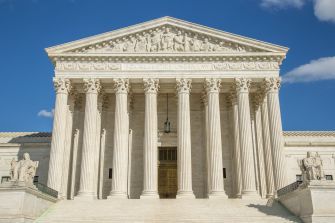
The Supreme Court on Tuesday, October 27, 2026, rejected an emergency request to restore immigration judges' authority to temporarily close certain deportation cases, leaving in place a nationwide restriction that prevents judges from using a Biden-era regulation to pause proceedings while immigrants pursue other forms of legal protection.
The justices denied an application from three cities and an immigrant legal advocacy group seeking to suspend a federal court judgment that invalidated the regulation. Their one-sentence order offered no explanation, and no justice publicly dissented.
The restriction stems from a June 22 lawsuit filed by Texas against the Trump administration. That same day, the Justice Department agreed with the state that the regulation was unlawful, and U.S. District Judge Reed O'Connor entered a consent judgment vacating the rule nationwide.
The practice, known as administrative closure, allowed immigration judges to remove cases from their active calendars while immigrants awaited decisions on humanitarian protections, visa petitions or other applications that could permit them to remain in the United States. With the restriction still in effect, affected proceedings can move forward while those applications are pending.
Administrative closure has been used by crime victims cooperating with law enforcement, children seeking special immigration protections, and immigrants awaiting decisions on other applications. Cases removed from active court calendars can later be reopened. Approximately 360,000 immigrants received administrative closure between 1990 and 2026, according to government statistics.
The Biden administration formally authorized the practice under a 2024 regulation, restoring discretion restricted during President Donald Trump's first term. After Trump returned to office in 2025, the Justice Department changed its position, arguing that immigration judges lacked authority to suspend deportation proceedings indefinitely.
Texas challenged the regulation, claiming that it exceeded federal immigration law by allowing judges to postpone decisions on whether immigrants should be deported. O'Connor's June judgment also restricted the administration from adopting future regulations permitting similar administrative closures without express authorization from Congress.
Some immigration courts had already begun reopening administratively closed cases by September, according to the Immigrant Legal Resource Center, which reported that courts were interpreting the June judgment broadly. The organization also described concerns about the treatment of requests to terminate removal proceedings, a separate procedure that can end a deportation case.
Baltimore, Maryland; Columbus, Ohio; New Haven, Connecticut; and the California-based legal services organization Centro Legal de la Raza sought to intervene in the lawsuit, accusing Texas and the Trump administration of coordinating litigation to eliminate the rule while bypassing federal rulemaking requirements.
Represented by Democracy Forward, the challengers argued that the agreement circumvented the Administrative Procedure Act, which generally requires federal agencies to provide public notice and an opportunity for comment before repealing regulations.
The cities warned that eliminating administrative closure could discourage immigrant crime victims from cooperating with police and increase deportations among residents. Centro Legal said the restriction would increase demand for legal assistance as more immigration proceedings moved forward.
O'Connor rejected their request to intervene on August 21, finding that the cities' claims of lost tax revenue, reduced crime victim cooperation, and other potential harms were too speculative or indirect to establish legal standing. He also found that Centro Legal's anticipated increase in legal services costs was insufficient to justify intervention.
Federal lawyers subsequently urged the Supreme Court to deny emergency relief, arguing that the challengers lacked standing and had failed to demonstrate immediate harm. The Justice Department also maintained that the June judgment applied prospectively and did not automatically require immigration courts to reopen cases previously placed in administrative closure.
After the Fifth U.S. Circuit Court of Appeals declined to suspend the judgment, the cities and Centro Legal asked the Supreme Court to restore the regulation while their appeal proceeded.
Their appeal continues before the Fifth Circuit, where judges must decide whether the challengers can intervene to contest the June judgment restricting administrative closure in deportation proceedings.