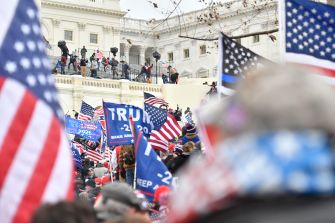
A federal judge has reluctantly dismissed the final prosecution arising from the Jan. 6, 2021, attack on the U.S. Capitol after the Justice Department obtained the removal of eight Oath Keepers’ convictions and asked to abandon the charges.
U.S. District Judge Amit Mehta granted the government’s request on August 4 and dismissed the superseding indictment with prejudice, preventing the charges from being filed again. His 15-page opinion sharply questioned the department’s reasons but concluded that he lacked a valid basis to interfere with its charging decision.
The order covers Oath Keepers founder Stewart Rhodes, Kelly Meggs, Kenneth Harrelson, Jessica Watkins, Roberto Minuta, Joseph Hackett, David Moerschel and Edward Vallejo. Six were convicted of seditious conspiracy. Watkins and Harrelson were acquitted of that charge but found guilty of other conspiracy and obstruction offenses.
Federal seditious conspiracy law generally prohibits agreements to use force to overthrow or oppose the authority of the United States, prevent the execution of federal law or seize federal property. Prosecutors relied on that statute and other conspiracy laws to accuse Oath Keepers members of planning to use force to stop Congress from certifying the 2020 presidential election.
According to the court’s account of the evidence, some members entered the Capitol in military-style gear while firearms were stored at a Virginia hotel for a possible quick reaction force. Mehta wrote that the weapons were not brought into Washington because no order to deploy them was given.
The case was divided into two trials. Both juries returned a mixture of guilty and not guilty verdicts, which Mehta cited in rejecting claims that jurors had simply accepted the government’s case. Prison terms ranged from three years for Moerschel to 18 years for Rhodes.
President Donald Trump commuted the sentences of the eight Oath Keepers to time served on January 20, 2025. His clemency proclamation pardoned most people convicted of Jan. 6 offenses but excluded 14 named individuals from full pardons, including those covered by Mehta’s ruling.
A commutation reduces or ends a criminal sentence but ordinarily leaves the conviction intact. A pardon grants executive clemency for an offense. Vacatur sets aside a court judgment, while dismissal ends the prosecution. A dismissal with prejudice prevents the government from bringing the same case again.
Their appeals continued until the Justice Department moved in April 2026 to have the convictions vacated. The federal appeals court granted the request on May 21 and returned the case to Mehta.
Prosecutors initially offered only a two-page motion stating that dismissal served the interests of justice. Mehta directed the department to provide the factual and legal basis for its decision before he ruled.
The department later argued that another trial could subject the group to harassment, that dismissal would carry out Trump’s clemency proclamation and that the completed trials had already served the public interest.
Mehta rejected the harassment argument because the government had not repeatedly filed and dismissed charges or suggested that it planned to retry the group. He said the type of harassment addressed by federal criminal rules did not match the circumstances before him.
The judge also found the department’s reliance on Trump’s proclamation unpersuasive. The president had specifically withheld full pardons from the group, and the Justice Department did not explain what had changed before it asked the appeals court to eliminate the convictions.
Mehta drew a further distinction between preserving a historical record and preserving a legal judgment. Trial transcripts and evidence would remain public, he wrote, but dismissal would remove the jury findings that the eight had violated federal criminal law.
Federal Rule of Criminal Procedure 48(a) allows the government to dismiss an indictment with a court’s approval. Judges may require prosecutors to explain their reasons and guard against harassment or an abuse of discretion, but charging decisions remain primarily an executive branch responsibility. A court generally cannot reject a dismissal solely because it disagrees with the government.
Mehta said the department had not identified legally flawed charges, insufficient evidence, prosecutorial misconduct or wrongful convictions. He acknowledged that a Supreme Court ruling narrowing the federal obstruction statute could affect some counts, but said it did not explain why the other conspiracy convictions should also be removed.
The judge nevertheless found no evidence that the prosecutors seeking dismissal had failed to carry out their official duties. Under the controlling legal standard, his disagreement with the Justice Department was not enough to deny the motion.
Mehta dismissed the indictment against the eight Oath Keepers with prejudice on August 4. The government’s motion did not address Joshua James or Brian Ulrich, who pleaded guilty to seditious conspiracy and cooperated with prosecutors, and their convictions remain in place.