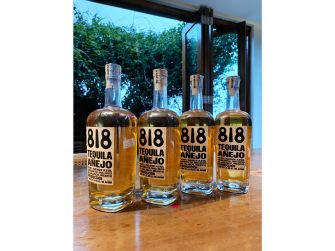
Kendall Jenner’s 818 Tequila has lost its bid to end a proposed consumer class action brought by buyers who say they paid premium prices for bottles labeled “100% agave” after laboratory testing allegedly detected alcohol from other sources.
U.S. District Judge Matthew Kennelly ruled October 7, 2026, that the consumers had alleged enough detail for their “100% agave” and “handcrafted” claims to move forward. He dismissed their challenge to 818’s “small batch” labeling along with several other state-law claims.
Robert Bacos, Alin Pop and Andrei Tomescu filed the lawsuit April 3 in the U.S. District Court for the Northern District of Illinois against Calabasas Beverage Company and 818 Spirits. All three bought 818 Tequila Blanco and say the brand’s representations about its ingredients and production methods affected what they were willing to pay.
The consumers allege they would have paid less, or skipped the purchase, if the tequila’s composition and manufacturing methods had been represented differently.
What ‘100% Agave’ Means Under Tequila Rules
Under Mexico’s official tequila standard, “100% agave” does not mean agave must be the only ingredient in the bottle. Certain flavorings, sweeteners, coloring agents and other additives can still be permitted. The designation does require all of the alcohol in the tequila to come from blue Weber agave sugars.
The plaintiffs say testing by Eurofins Analytics found signatures inconsistent with alcohol derived entirely from agave. Their complaint cites carbon isotope ratio analysis and nuclear magnetic resonance testing as support for the allegation.
Kennelly’s task at this stage was to determine whether the complaint described the alleged fraud with enough detail and plausibility to continue. He found the consumers had sufficiently identified the challenged statements, the laboratory, the testing methods and the reported results.
The ruling allows those allegations to move into the next stages of the case. The merits will ultimately depend on whether the testing and other evidence support the consumers’ claims about what is actually in 818 Tequila.
Kennelly also found the buyers had adequately alleged financial harm by saying they paid a premium for tequila worth less than the labeling led them to expect. That price-premium theory was enough to support an economic injury without requiring allegations that the tequila tasted worse.
‘Handcrafted’ Claim Survives While ‘Small Batch’ Falls Away
The “handcrafted” claim also survived. Kennelly found consumers could reasonably understand the term as suggesting meaningful human involvement in production, while the plaintiffs allege 818 is produced with extensive automation at a large industrial distillery.
Information about the distillery and production process on 818’s website did not necessarily resolve an impression created by the bottle itself, the judge found.
The court reached a different result on “small batch.” Kennelly dismissed that theory because the plaintiffs identified no measurable production limit, industry standard or regulatory definition that made the phrase deceptive. A distillery could produce a large overall volume through numerous smaller batches, he reasoned.
Kennelly also dismissed the consumers’ request for an injunction requiring future labeling changes, finding that buyers already aware of the alleged misrepresentations were unlikely to encounter the same deception again.
The proposed class allegations remain in the case, including claims involving Reposado and Añejo even though the three named plaintiffs purchased Blanco. Kennelly said questions about whether they can represent buyers of the other varieties can be addressed during class certification. No class has yet been certified.
Mexico’s Tequila Certification Could Shape What Happens Next
A separate legal issue remains unresolved. 818 argues that its certification under Mexico’s official tequila regulatory system should limit how far a U.S. court can go in reviewing whether the product qualifies as “100% agave.”
The Tequila Regulatory Council oversees certification within Mexico’s tequila system. 818 has invoked international comity and the act of state doctrine, legal principles that can require U.S. courts in some circumstances to give weight to foreign governmental actions rather than independently reexamine them.
Kennelly deferred that issue for further argument. The next phase will determine how much legal significance the Mexican certification carries as the consumers continue challenging the composition and marketing of tequila sold in the United States.