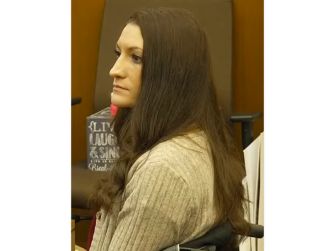
Lindsay Clancy’s attorneys are asking a Massachusetts judge to dismiss the murder charges against her, arguing that the September 4 mistrial violated constitutional protections against double jeopardy because the court ended deliberations without sufficiently examining concerns about the lone holdout juror.
Attorneys Martin Weinberg and Kevin Reddington filed the motion Monday in Plymouth Superior Court, less than three weeks after Judge William Sullivan declared a mistrial. Several jurors later said the panel had split 11-1 in favor of finding Clancy not guilty by reason of lack of criminal responsibility.
The filing asks Sullivan to decide whether prosecutors may put Clancy on trial again. A genuinely deadlocked jury ordinarily permits a retrial, but her attorneys argue that Sullivan had reasonable alternatives available before discharging the panel.
Jurors deliberated for seven days before the trial ended. The dispute over the holdout juror surfaced on September 3, when the jury sent Sullivan a note reporting that one member was unable to follow the court’s instructions concerning reasonable doubt.
Sullivan questioned all 12 jurors individually under oath about whether they could follow his instructions. Each said they could. He then brought the panel back into court, repeated the reasonable doubt instruction, and directed jurors to continue deliberating.
Reddington argued that the issue required a more focused inquiry and asked Sullivan to remove the juror. Prosecutor Jennifer Sprague opposed the request, saying the court could not probe the substance of jury deliberations and that Sullivan’s instruction was sufficient.
Clancy’s new motion argues that Sullivan should have examined the issue further before concluding that the jury was hopelessly deadlocked. Weinberg contends a more targeted inquiry could have determined whether the juror simply disagreed with the other 11 members or was refusing to apply the law as instructed.
That distinction is central to the double jeopardy argument. A juror may remain on a panel because he reaches a different conclusion from the majority. A refusal to follow the court’s legal instructions can raise a separate question about whether removal is appropriate.
Clancy’s lawyers say Sullivan should have determined whether legally permissible grounds existed to replace the juror with an alternate before ending the trial.
A genuinely deadlocked jury ordinarily creates the “manifest necessity” that allows prosecutors to try a case again. Massachusetts courts also require judges to hear from the parties and consider reasonable alternatives before ending a trial over a defendant’s objection.
The Massachusetts Supreme Judicial Court addressed that principle in Commonwealth v. Nicoll, a 2008 case in which it upheld dismissal of criminal charges after finding that a judge had declared a mistrial without adequately considering an available alternative. The court said prosecutors carry a heavy burden to establish manifest necessity when they seek another trial under those circumstances.
Clancy’s attorneys argue that her case presents a similar problem because Sullivan knew the jury’s impasse involved complaints that one member was disregarding his instructions. They maintain that ending the trial before resolving that issue deprived Clancy of her right to have the first jury decide the case.
A separate defense filing seeks additional scrutiny of holdout juror Michael Desronvil. Reddington has asked the court to examine allegations involving Desronvil’s cellphone use during deliberations and information contained in his jury questionnaire. Desronvil has disputed other jurors’ descriptions of his position and said after the trial that he believed the evidence showed Clancy knew what she was doing.
Clancy, 36, remains charged with three counts of first-degree murder in the January 2023 deaths of her children, Cora, 5, Dawson, 3, and Callan, 8 months, at the family’s Duxbury home.
She has acknowledged killing the children. Her murder trial centered on whether she was criminally responsible at the time. The defense argued that postpartum psychosis deprived her of the capacity required for criminal responsibility, while prosecutors maintained that her actions showed she understood what she was doing and deliberately planned the killings.
Plymouth County District Attorney Timothy Cruz has yet to announce whether prosecutors intend to retry Clancy. Sullivan also has yet to rule on the motion to dismiss or the separate request involving Desronvil. The case returns to Plymouth Superior Court on September 29, when the court is expected to address the legal fight over whether the murder prosecution can continue.